Anxiety affects nearly 1 in 4 adults in the U.S., but therapy can be costly, with sessions averaging $100–$200. Mental health apps offer an affordable and accessible alternative, with many costing as little as $5.26 on average. These apps provide tools to track symptoms, manage panic attacks, and practice coping strategies, making mental health support more accessible to millions.
Here’s a quick look at 16 apps that can help you manage anxiety:
- Anxiety Journal: Tracks panic attacks and moods; includes breathing exercises. Free with premium options starting at $9.99/month.
- Calm: Meditation and mindfulness app with guided exercises. $14.99/month or $69.99/year.
- Headspace: Focuses on mindfulness with structured courses. $12.99/month or $69.99/year.
- Worry Watch: CBT-based journaling to track and challenge worries. $11.99/year.
- MindShift CBT: Free app with CBT tools like fear ladders and coping cards.
- Happify: Game-based activities to reduce anxiety and build resilience. $14.99/month or $139.99/year.
- Breathwrk: Breathing exercises for relaxation and focus. $5.75/month or $12.00/month.
- Sanvello: Clinical-grade tracking and therapy tools. $8.99/month or $53.99/year.
- Rootd: Panic attack SOS and CBT tools. Free with premium options at $9.99/month or $79.99/year.
- Youper: AI-powered emotional health assistant. $69.99/year.
- Pacifica: Combines CBT, mindfulness, and mood tracking. $3.99/month or $29.99/year.
- Bearable: Tracks symptoms and lifestyle factors. $6.99/month or $34.99/year.
- CBT Companion: Interactive CBT exercises and mood tracking. $9.99/month or $49.99 for 6 months.
- Finch: Gamified self-care with a virtual pet. $9.99/month or $70.99/year.
- Violet: Focuses on diverse community support.
- NOCD: Specialized for OCD with ERP therapy. Free resources; therapy sessions start at $50 with insurance.
Quick Comparison
| App | Focus | Key Tools | Pricing | Ratings |
|---|---|---|---|---|
| Anxiety Journal | Panic attack tracking | Journaling, breathing | Free, $9.99/month+ | iOS: 4.5★, Android: 4.3★ |
| Calm | Meditation & mindfulness | Breathing, sleep stories | $14.99/month, $69.99/year | iOS: 4.8★, Android: 4.3★ |
| Headspace | Mindfulness training | Guided meditations | $12.99/month, $69.99/year | iOS: 4.8★, Android: 4.3★ |
| Worry Watch | CBT journaling | Worry tracking | $11.99/year | iOS: 4.6★ |
| MindShift CBT | CBT tools | Coping cards, fear ladders | Free | iOS: 4.3★ |
| Happify | Resilience-building games | Positive psychology tracks | $14.99/month, $139.99/year | iOS: 4.5★, Android: 4.4★ |
| Breathwrk | Breathing exercises | Relaxation, focus tools | $5.75-$12.00/month | iOS: 4.8★, Android: 3.7★ |
| Sanvello | Clinical-grade tracking | CBT, guided meditations | $8.99/month, $53.99/year | iOS: 4.8★, Android: 4.5★ |
| Rootd | Panic attack support | SOS button, breathing | Free, $9.99/month+ | iOS: 4.8★, Android: 4.5★ |
| Youper | AI emotional health | CBT-based AI chat | $69.99/year | iOS: 4.8★, Android: 3.9★ |
| Pacifica | Stress management | CBT, mood tracking | $3.99/month, $29.99/year | iOS: 4.6★, Android: 4.4★ |
| Bearable | Symptom tracking | Lifestyle factor analysis | $6.99/month, $34.99/year | iOS: 4.7★, Android: 4.7★ |
| CBT Companion | CBT exercises | Thought records, meditations | $9.99/month, $49.99/6 mo. | iOS: 4.6★, Android: 4.4★ |
| Finch | Gamified self-care | Virtual pet, habit tracking | $9.99/month, $70.99/year | iOS: 4.9★, Android: 4.9★ |
| Violet | Community support | Peer engagement | Free | N/A |
| NOCD | OCD-specific tools | ERP therapy, tracking | Free, therapy $50+ | iOS: 4.9★, Android: 4.7★ |
These apps offer a range of features, from tracking symptoms to guided meditations and CBT tools. They provide a flexible way to manage anxiety, whether you’re looking for quick relief, long-term strategies, or community support. Choose the one that fits your needs and budget.
Mobile Apps for Depression and Anxiety: Finding an App That Will Work for You
1. Anxiety Journal: Panic Attack & Anxiety Tracker
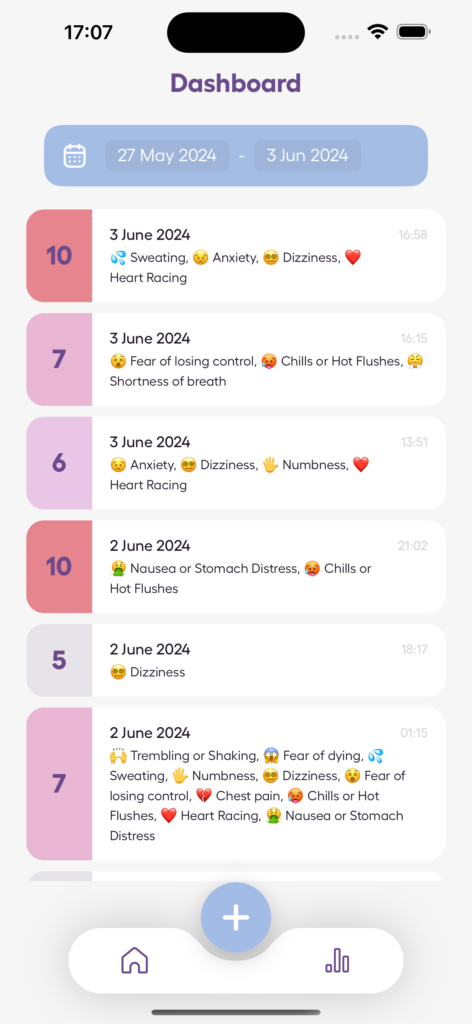
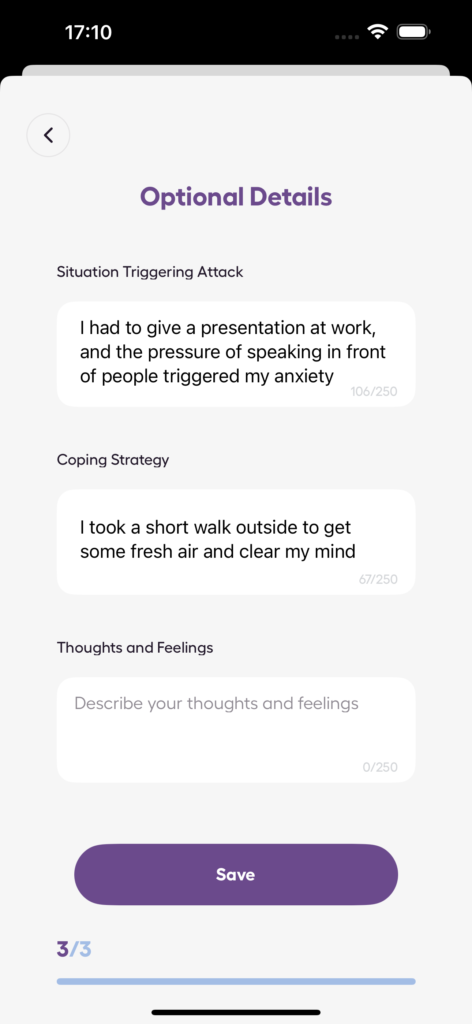
Anxiety Journal is a well-rounded app designed to help users track and manage their anxiety effectively. By combining clinical assessments, AI technology, and evidence-based tools, it provides a comprehensive way to understand and navigate mental health challenges.
Anxiety Tracking Features
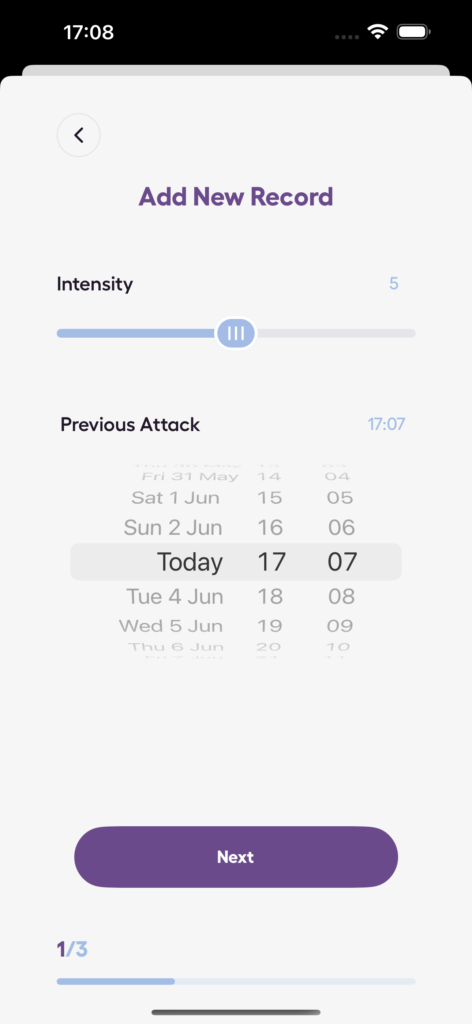
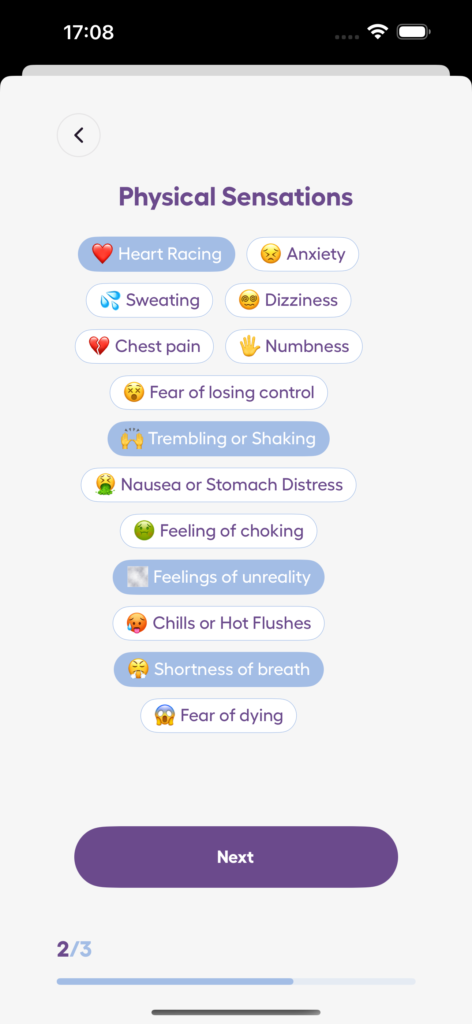
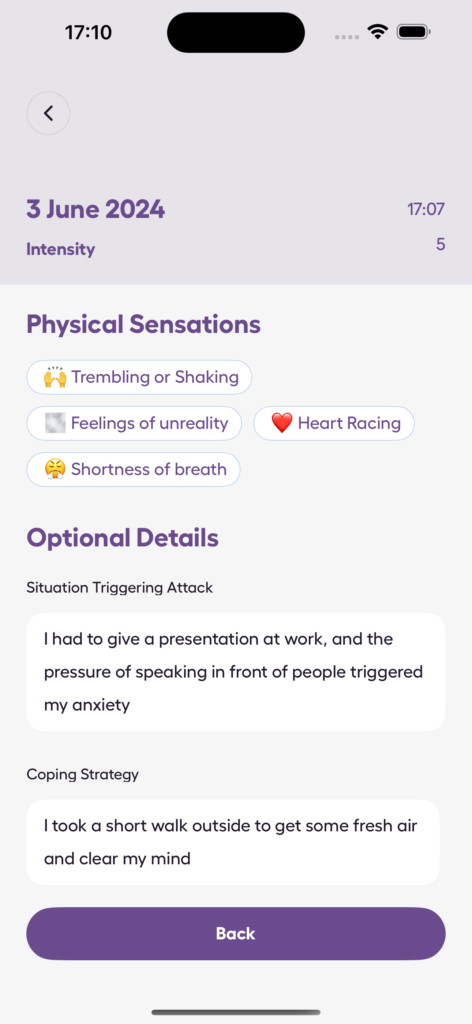
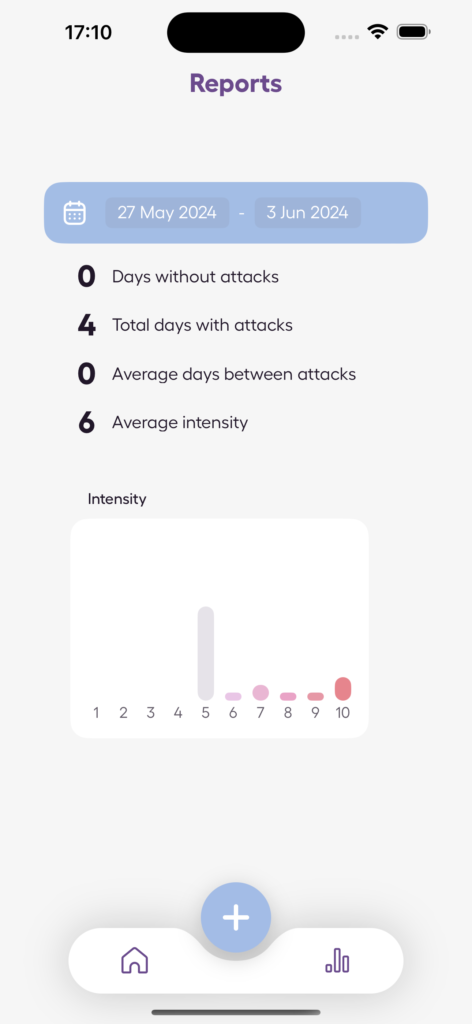
The app excels in helping users monitor their mental health. With daily GAD-7 check-ins, users can log symptoms of panic attacks, identify triggers, and track mood changes. This creates a detailed picture of their emotional well-being. The panic attack log is particularly useful, as it records symptoms, duration, and circumstances, enabling users to recognize patterns and potentially prevent future episodes. Additionally, the positivity journal encourages users to capture moments of joy and gratitude, offering a balanced approach to mental health tracking. These features work together to provide valuable insights that can guide timely therapeutic interventions.
Tools for Managing Anxiety
Beyond tracking, Anxiety Journal includes tools designed to help users manage anxiety in the moment. The app offers guided box breathing exercises with animations, along with other relaxation techniques aimed at providing quick relief during stressful situations. Research supports the benefits of journaling for emotional health, with studies showing that expressive writing can reduce anxiety and depressive symptoms within just a month.
"Journaling is a highly recommended stress-management tool that can help you reduce anxiety, lessen feelings of distress, and increase well-being." – Elizabeth Scott, PhD
The app’s AI-driven features add another layer of support by identifying anxiety triggers and analyzing emotional patterns, delivering tailored insights to users.
Availability and Pricing
Anxiety Journal is available for free on both iOS and Android, making it accessible to a wide audience. For those looking to unlock additional features, in-app purchases are available, with pricing options starting at $9.99 per month, $14.99 annually, or a $39.99 trial option.
The app has received positive feedback from users, reflected in its 4.3-star rating on the Google Play Store (646 reviews) and 4.5-star rating on the Apple App Store (62 ratings). Users have shared personal stories about how the app has made a difference. For instance, in March 2025, Jessika highlighted how it helped her cope with social anxiety after a difficult experience, offering much-needed comfort and support [Apple App Store Reviews, 2025]. Similarly, Chelsey shared in December 2024 that the app was a game-changer when other solutions didn’t work, praising its non-judgmental approach to managing anxiety [Apple App Store Reviews, 2024].
The app also prioritizes user privacy, ensuring that data is securely stored while providing detailed insights into anxiety patterns.
2. Calm: Guided Meditation App
Calm offers a well-rounded meditation experience, designed to help users manage anxiety effectively. With a mix of guided meditations, breathing exercises, and practical techniques, it provides tools to navigate overwhelming moments.
Tools and Features for Anxiety Relief
Calm includes features like the Breathing Bubble and Panic SOS, which are designed to provide immediate relief during stressful situations. For those looking for a more structured approach, the app offers programs such as the "Overcome Stress and Anxiety" series with Dr. Julie Smith and step-by-step courses like "7 Days of Calming Anxiety".
The app also incorporates mindfulness-based stress reduction (MBSR) techniques, including body scans and walking meditations, to help users build long-term coping strategies. Another highlight is the 5-4-3-2-1 grounding technique, which uses sensory engagement to help users regain focus and calm during moments of distress.
Real-life testimonials reflect the app’s impact on anxiety management:
"Calm is a life-changing app. Now I’ve been meditating for 3 years, and it’s been able to really reduce the anxiety that was creating a lot of issues in my life." – Alex from Orlando
"I get a lot of anxiety attacks. I never knew how to cope with them, but this app has really helped me a lot." – Teri from Long Beach
Calm also caters to families. A study involving over 900 parents found that 74% felt Calm Kids reduced their parenting stress, while 63% reported better sleep quality.
Backed by Research
Calm’s effectiveness is supported by clinical research. In a study with college students, eight weeks of Calm use led to significant reductions in stress, improved mindfulness, and enhanced self-compassion. The study reported moderate to large effect sizes (0.59 to 1.24), with benefits lasting even after the program ended.
Additionally, 51% of students found Calm helpful to very helpful for managing short-term stress, with similar results for long-term relief. Satisfaction rates were high, with 85% of participants expressing satisfaction and 68% planning to continue using the app.
Another study focused on adults with sleep issues revealed that eight weeks of Calm use significantly reduced pre-sleep anxiety, daytime fatigue, and sleepiness, while also boosting cognitive function.
Accessibility and Pricing
Calm is available on a variety of platforms, including iOS, Android, Web, Apple TV, Apple Watch, Google WearOS, Samsung Health, Samsung TV, and Sonos. It holds an impressive 4.8-star rating on the Apple App Store.
The app offers a 14-day free trial for new users. Subscription options include:
- $14.99/month for a monthly plan
- $69.99/year for an annual plan
- $399.99 for a lifetime subscription
Families can opt for a shared plan at $99.99 per year, which supports up to six accounts. Businesses can also benefit from Calm’s offerings, with plans starting at $38.27 per individual per year for teams ranging from 5 to 300 employees.
3. Headspace: Mindfulness Training App
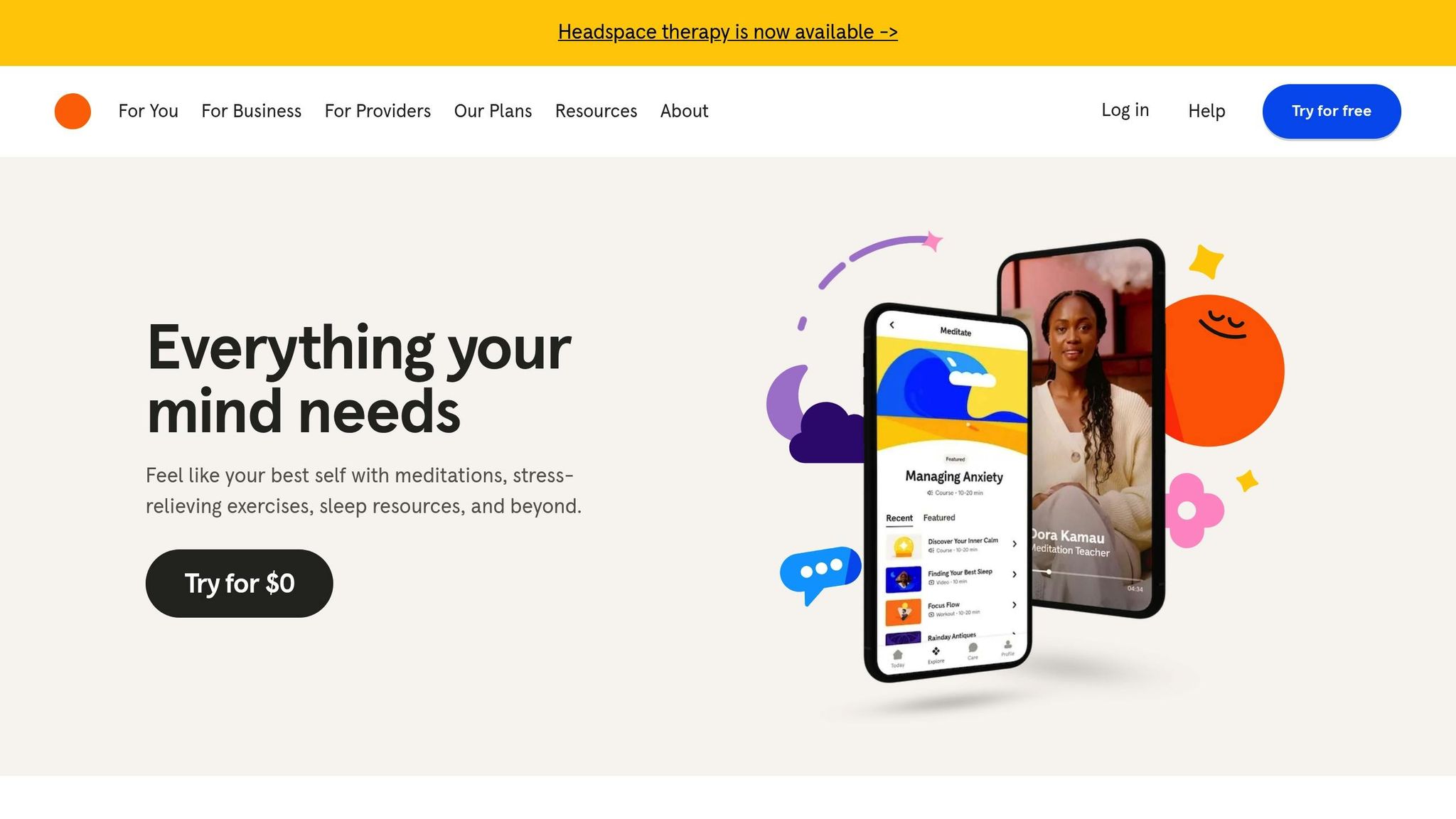
Headspace leverages mindfulness and meditation to help users navigate anxiety. Instead of resisting anxious thoughts, the app encourages users to engage with them in a constructive way.
Therapeutic Tools and Techniques
The "Managing Anxiety" course on Headspace helps users identify triggers and reshape their mental responses through guided meditation. The app provides a mix of standalone meditations and structured courses like "Bring Yourself Back" and "Deep Breaths Workout" to assist with moments of heightened anxiety. It also incorporates body awareness techniques, encouraging users to focus on physical sensations and use their breath as an anchor for calm. These practices aim to help users observe and release anxious thoughts rather than suppress them [29, 31].
"It’s not about getting rid of anxiety, it’s about changing our relationship to it, being at ease with it. Fundamentally being okay with anxiety when it arises in the mind so that we don’t buy in to it, we don’t push away from it, we don’t resist it. Instead we’re able to just watch it come and watch it go. That is a really comfortable and really healthy place to be in relationship to anxiety."
These techniques are not just experiential – they are grounded in clinical research.
Clinical Validation and Evidence
Headspace’s methods are supported by extensive research, including 68 peer-reviewed studies on digital mental health. For example, a study conducted by the University of California, San Francisco, revealed that employees using Headspace experienced a 37% reduction in anxiety symptoms. Sarah Kunkle, Senior Director of Research at Headspace, highlighted this impact:
"This study validates what we’ve seen in our own data: Headspace can have a transformative impact on individual wellbeing and even a few minutes of consistent practice can make a difference."
Additional findings show that using Headspace for eight weeks can reduce anxiety symptoms by 19%, while its sleep-focused program, "Finding Your Best Sleep," led to a 27% decrease in anxiety [31, 35]. Clinical follow-up data also indicates that 59% of Headspace Care members reported significant improvements in anxiety. Furthermore, a meta-analysis of mindfulness apps found small but meaningful effects on anxiety levels (g = 0.28) [33, 23]. These results highlight the app’s effectiveness in addressing anxiety.
Platform Availability and Pricing
Headspace is accessible on both Apple and Android devices. Subscription options include a monthly plan for $12.99 (with a 7-day free trial), an annual plan for $69.99, and a family plan for $99.99, which covers up to six members [36, 37, 38, 39]. Students can take advantage of an 85% discount by verifying their status through SheerID. Subscriptions renew automatically unless canceled, and users can manage their plans directly through their device’s app store.
4. Worry Watch: Cognitive Behavioral Tracking
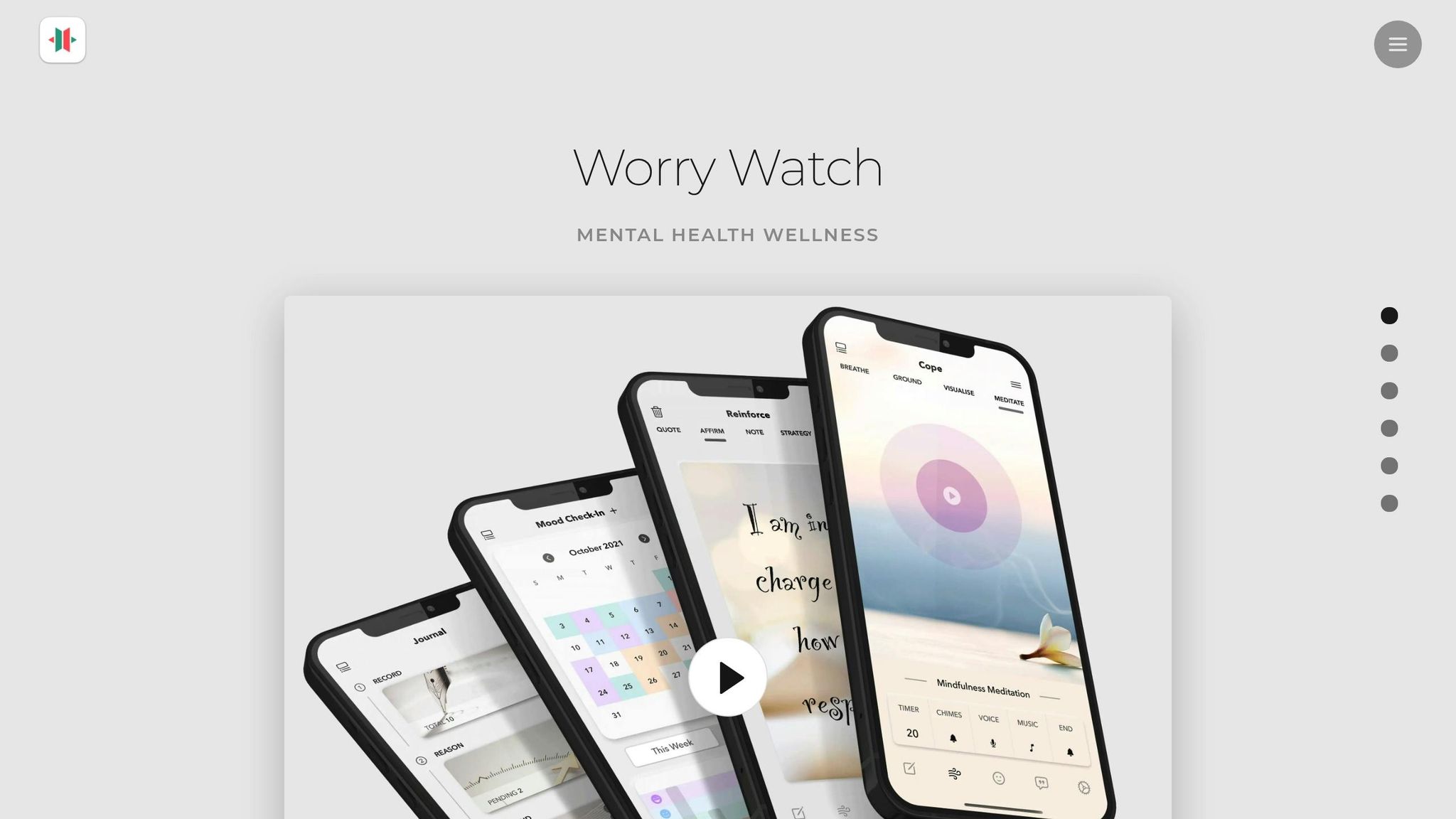
Worry Watch integrates principles of Cognitive Behavioral Therapy (CBT) with digital tools to help users manage anxiety. By focusing on the science of how thoughts influence emotions and behaviors, the app encourages users to recognize and address cognitive biases. This structured approach sets Worry Watch apart in the crowded space of anxiety management apps.
Anxiety Tracking Capabilities
The app’s core feature is a guided journaling system based on a "Record > Reason > Respond > Reflect" process. Users can log their anxiety episodes, rate their intensity, identify triggers, and pinpoint cognitive distortions. Over time, this creates a clear picture of personal worry patterns. One user, PolarBear19, shared on the Apple App Store:
"Using this app has allowed me to verbalize my fears, categorize them, and reflect back on them. In doing so, I’m able to identify unnecessary worry more quickly when something similar occurs."
This reflective process helps users assess whether their fears match actual outcomes, allowing them to challenge exaggerated worries effectively.
Therapeutic Tools and Techniques
Worry Watch goes beyond tracking by offering practical tools for immediate relief. These include deep breathing exercises, sensory grounding techniques, guided imagery, and mindfulness meditation. The guided journaling feature further supports users in challenging irrational thoughts and reflecting on their responses. Importantly, it also encourages users to recognize when their fears were justified, ensuring a balanced perspective rather than an overly optimistic reinterpretation of stressful situations.
Clinical Validation and Evidence
The app’s reliance on CBT principles aligns it with evidence-based practices known to help manage anxiety. Research supports the effectiveness of CBT-based tools in addressing mild to moderate anxiety, and Worry Watch reflects this in its approach. Its success is echoed in its 4.6/5 rating on the App Store, indicating strong user satisfaction.
Platform Availability and Pricing
Worry Watch is currently available only for iOS devices. It offers a free version with limited features, giving users a chance to explore its basic functionality. For full access to all tools and tracking capabilities, users can opt for a monthly subscription at $2.99 or an annual plan at $11.99. Additionally, the app prioritizes user privacy with offline functionality, ensuring data remains secure.
5. MindShift CBT: Clinical Anxiety App
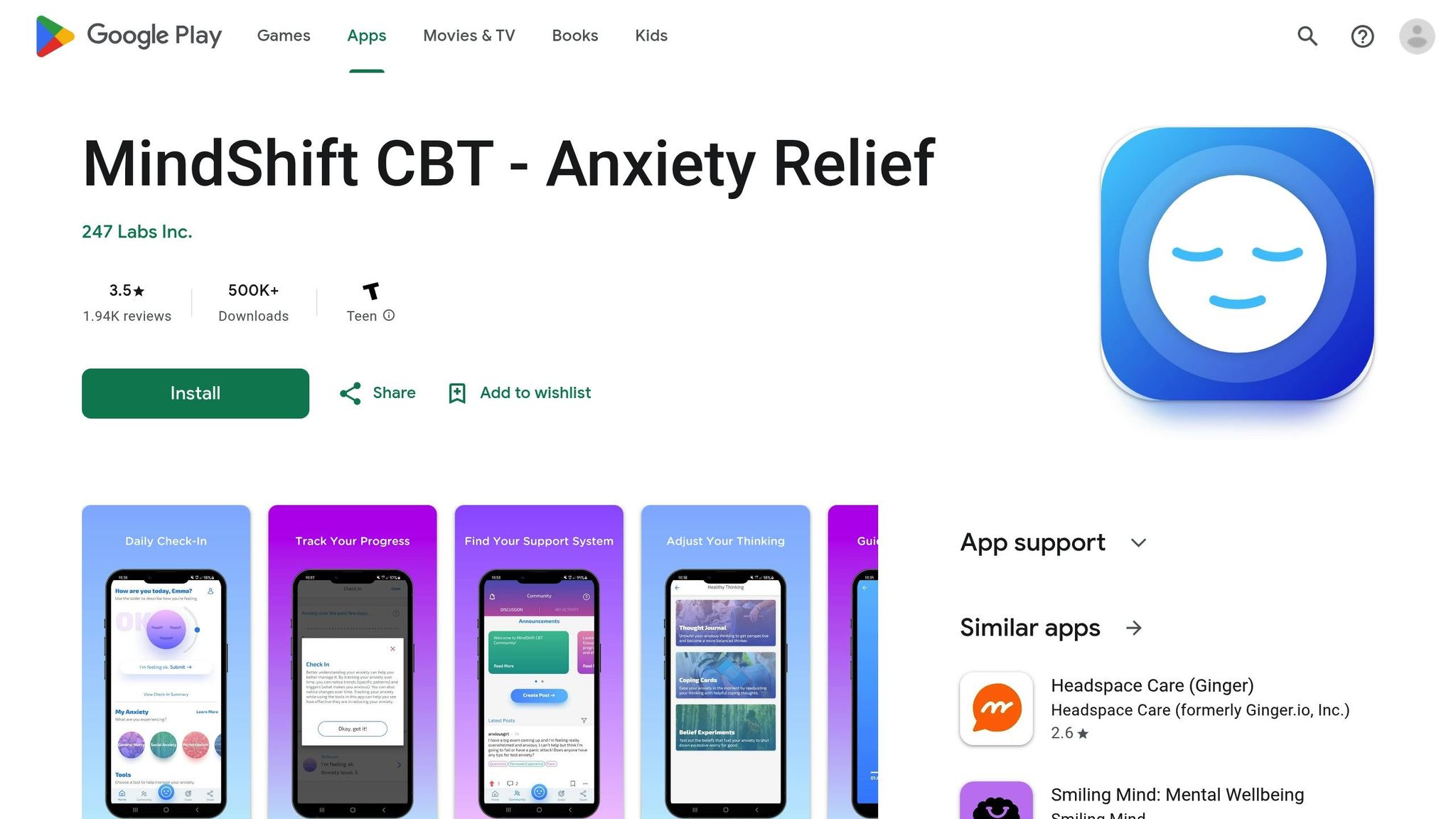
MindShift CBT is a free app created by Anxiety Canada and 247 Labs. It uses evidence-based cognitive behavioral therapy (CBT) techniques to help users manage anxiety, stress, and panic. This app emphasizes the importance of reliable tools for addressing mental health challenges.
Anxiety Tracking Capabilities
MindShift CBT allows users to monitor their anxiety and mental health daily. Through features like check-ins and integrated journals, users can track their moods and thoughts, helping to identify patterns over time. However, there is a limitation: users can only make up to three entries within a 24-hour period, and past entries are accessible for only two weeks.
Therapeutic Tools and Techniques
The app includes a variety of CBT-based tools designed to provide relief and foster self-management. These tools include belief experiments, fear ladders, coping cards, and guided meditations. Users can also customize plans to address specific anxiety triggers. Beyond these tools, the app offers educational resources such as videos, articles, and interactive exercises to deepen understanding of anxiety.
For immediate support, MindShift CBT provides quick-relief activities, relaxation techniques, and breathing exercises. A Community Forum is available for peer support, while the app’s features encourage mindfulness, thought reframing, and proactive coping strategies .
Clinical Validation and Evidence
The app’s foundation in CBT gives it strong clinical backing. A pilot trial conducted at the Center for Addiction and Mental Health (CAMH) in Toronto (April–May 2021) evaluated its effectiveness among psychiatric inpatients. Out of 28 participants, 24 (86%) consented to participate, with 20 individuals randomized for the study. Feedback from the Client Satisfaction Questionnaire (CSQ-8) highlighted positive satisfaction with the app, and user engagement was rated as moderate to high.
"MindShift has been an invaluable tool in my anxiety management journey. The thought journal helped me identify patterns I never noticed before." – Sarah K., User since 2021
Platform Availability and Pricing
MindShift CBT is available for free on both iOS and Android devices. In the US, it has a 4.2-star rating from 336 App Store reviews. In Australia, it enjoys a 4.5-star rating from 48 reviews. On Google Play, the app has a 3.5-star rating based on 1,940 reviews. While it remains a free and accessible tool for anxiety management, it’s important to note that updates and support for the app will end on March 31, 2025. After that date, all user data will be permanently deleted.
6. Happify: Game-Based Resilience Training
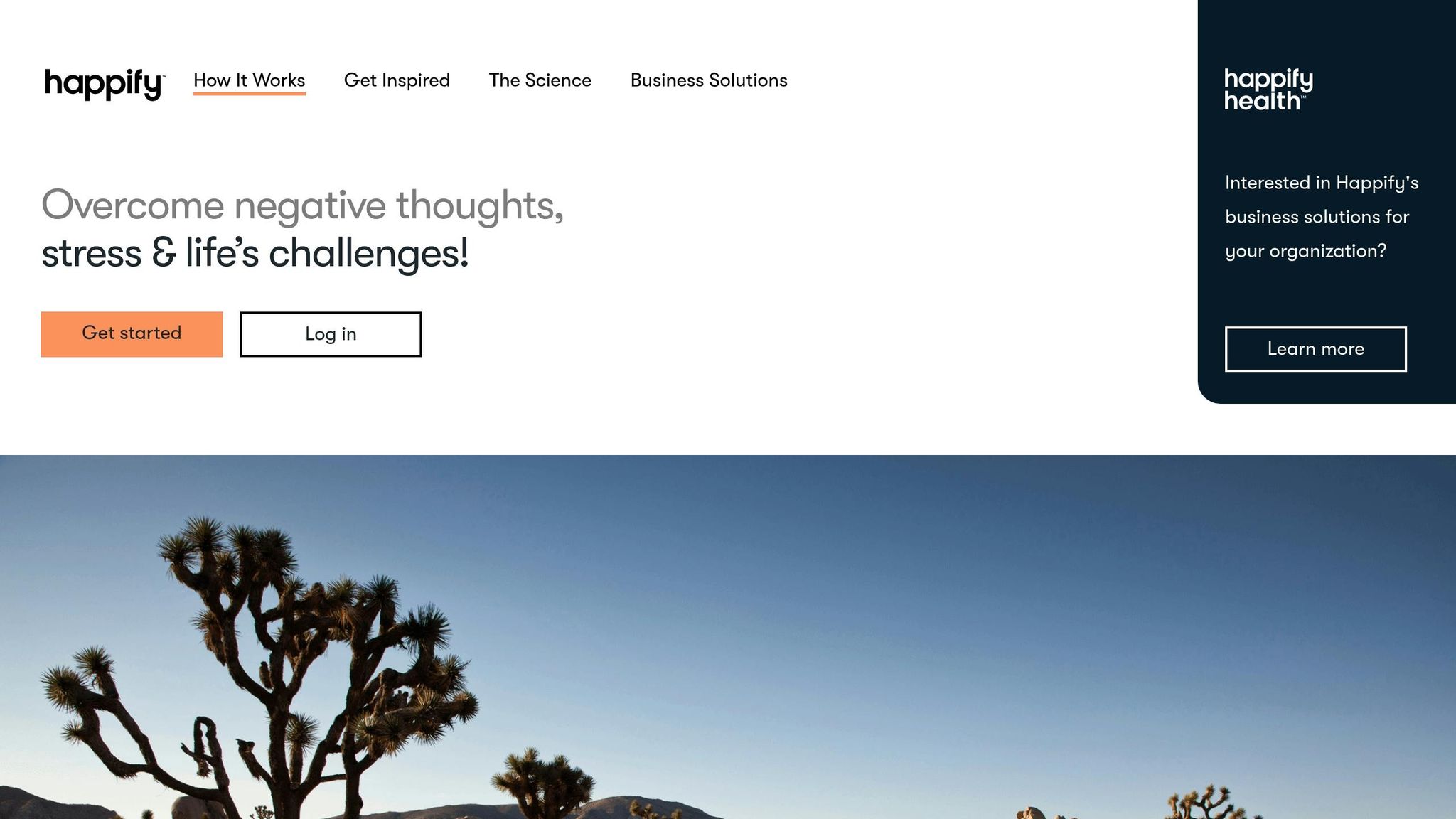
Happify takes a fresh approach to mental health by blending interactive games with proven therapeutic methods. This app uses research-backed activities to help users tackle anxiety, manage stress, and build resilience – all while keeping the process engaging and fun. Designed by experts in areas like positive psychology, mindfulness, and cognitive behavioral therapy (CBT), Happify turns self-improvement into an approachable and enjoyable experience.
Therapeutic Tools and Techniques
The core of Happify’s strategy lies in its "Tracks" – customized activity paths that incorporate CBT, mindfulness, and positive psychology principles. These Tracks aim to break negative thinking cycles, reduce anxiety, and foster qualities like optimism, confidence, and self-esteem. Activities range from practicing gratitude and focusing on aspirations to empathizing with others, all structured to be completed in just 5–15 minutes.
The app also includes personalized coaching tools, an AI coach, and interactive games. In collaboration with the Values in Action (VIA) Institute on Character, Happify offers a scientific assessment of users’ character strengths, helping them identify areas for personal growth.
"Happify gave me the tools I need to keep a handle on my work stress. I’ve learned to reframe my negative thoughts, focus on my core values, and be grateful for the small stuff!" – Lori N., Bend, OR
Happify’s guided meditations, games, and tailored activities are designed to enhance well-being and build practical coping strategies, setting users up for measurable mental health improvements.
Clinical Validation and Evidence
Studies have shown that Happify delivers tangible results. In an eight-week trial, participants who used the app two to three times per week reported a 25% reduction in depression and anxiety symptoms, along with a 21% boost in resilience. Regular users saw even more impressive outcomes, including a 68% decrease in depressive symptoms, a 92% drop in anxiety, and a 64% improvement in resilience compared to a control group.
Data from over 152,000 users revealed an 11% increase in happiness after eight weeks, with 86% of regular users reporting a better outlook on life within two months. Another study focused on individuals with cardiovascular risk factors found that those engaging in at least two activities per week showed a daily improvement rate nearly three times higher than less active users.
"One of the really powerful findings of this study is confirmation that resilience is a trainable skill and that Happify interventions can help build resilience over time." – Michele Tugade, Ph.D., Professor of Psychological Science at Vassar College
Platform Availability and Pricing
Happify is accessible on both iOS and Android platforms, boasting high ratings: 4.5 stars from 4,400 reviews on the Apple App Store and 4.4 stars from 3,340 reviews on Google Play. While the app offers a free version with limited features, full access comes with subscription options: $14.99 per month, $139.99 annually, or a one-time lifetime payment of $449.95.
"The biggest thing I’ve learned is how to change my outlook, especially when it comes to stressful experiences…Now I’ve learned how to look for and find the possibility of good in negative situations. It’s been both empowering and calming." – Angela W., Chattanooga, TN
Happify stands out by making anxiety management not just effective but also engaging, offering tools that help users build resilience and improve their mental well-being.
7. Breathwrk: Breathing Exercise App
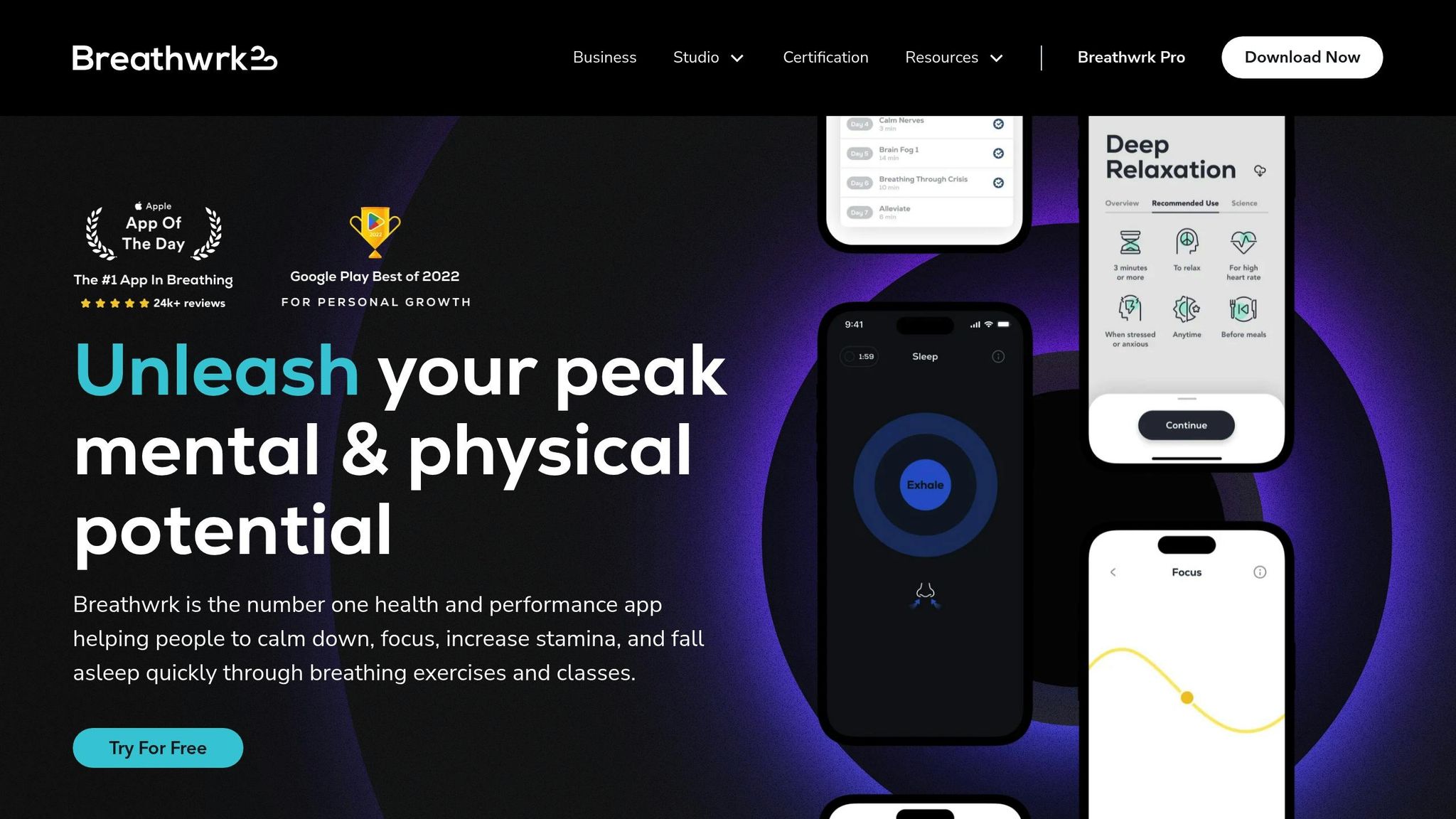
Breathwrk brings controlled breathing into the modern era, offering a convenient way to manage anxiety. The app provides more than 50 breathing exercises rooted in science, designed to help users relax, concentrate, build stamina, and sleep better. It seamlessly incorporates therapeutic breathing techniques into everyday life.
Therapeutic Tools and Techniques
Breathwrk organizes its extensive library into five categories, making it easy to find exercises tailored to specific needs. While the app is highly effective for managing anxiety and stress, it also offers specialized breathing techniques aimed at alleviating pain. These include exercises for migraines, nausea, and even chronic conditions like COPD (chronic obstructive pulmonary disease).
Users can set personal goals, schedule sessions, and customize their experience with features like soothing sounds, visuals, or tactile feedback. This flexibility allows users to discover what works best for them. The app’s techniques are grounded in research, ensuring they are both practical and effective.
Clinical Validation and Evidence
Scientific studies back the benefits of breathwork for managing anxiety. A 2023 study in Explore compared mindfulness meditation with three breathwork techniques – cyclic sighing, box breathing, and cyclic hyperventilation with retention. The results showed that breathwork, particularly cyclic sighing, led to greater mood improvements and reduced respiratory rates compared to mindfulness meditation.
Notably, 90% of study participants reported positive experiences during the exercises, and both groups experienced significant anxiety reduction. The researchers highlighted the potential of just five minutes of daily cyclic sighing as a powerful stress management tool:
"Daily 5‑min cyclic sighing has promise as an effective stress management exercise." – Melis Yilmaz Balban et al.
Platform Availability and Pricing
Breathwrk is accessible on iOS, Android, and web platforms, ensuring users can engage with it across various devices. The app has received strong feedback, earning a 4.8-star rating from over 16,600 reviews on the Apple App Store and a 3.7-star rating from 692 reviews on Google Play. Users frequently commend the variety of exercises, ease of use, and noticeable improvements in focus, stress levels, and sleep quality.
The app offers both free and premium plans. The premium option, Breathwrk Pro, unlocks the full library of exercises and features. It is priced at $5.75 per month with an annual subscription or $12.00 per month on a monthly plan. To ensure accessibility, Breathwrk provides scholarships for individuals unable to afford the subscription and offers discounts for teachers, students, military members, and first responders .
8. Sanvello: Clinical-Grade Anxiety Tracker
Sanvello is a mental health app that combines detailed tracking features with proven therapeutic techniques. Designed to support anxiety management, it offers a range of tools grounded in research, creating a well-rounded platform for users looking to improve their mental well-being.
Anxiety Tracking Capabilities
At the core of Sanvello is its robust tracking system, which helps users monitor their mental health in various ways. The app’s mood tracker allows users to log their emotions throughout the day, while its health tracker keeps tabs on factors like caffeine consumption, sleep quality, and physical activity. These features work together to identify patterns between daily habits and emotional states. Users can also view progress assessments that connect past logs to current mental health trends, offering insights into triggers and behavioral patterns. By answering simple questions regularly, users can maintain consistent tracking, making it easier to identify and address anxiety triggers.
Therapeutic Tools and Techniques
Sanvello builds on its tracking data by incorporating therapeutic techniques like cognitive behavioral therapy (CBT) and mindfulness. The app offers guided meditations, CBT-based journaling, and structured "Guided Journeys" that help users recognize negative thought patterns and set realistic goals for mental health improvement. These Guided Journeys include audio lessons and activities tailored to emotional well-being. Additional tools, such as thought-reframing exercises and daily reminders for mood tracking, meditation, and sleep regulation, further support users in managing their mental health [79,81].
Clinical Validation and Evidence
Sanvello’s effectiveness is backed by clinical research. In a randomized controlled trial with 500 participants experiencing anxiety and depression, those using Sanvello showed significantly greater reductions in symptoms compared to a control group over 35 days. The study reported effect sizes ranging from d = 0.34 to d = 0.54, highlighting meaningful improvements. Another eight-week clinical trial found that 44.9% of participants with anxiety experienced a 50% reduction in their GAD-7 scores, meeting the criteria for a treatment response. The study concluded:
"Our findings suggest that a popular, commercially available self‑guided DMHI can help individuals improve their symptoms of depression and anxiety. The treatment effects of Sanvello over 8 weeks are consistent with clinically important thresholds and may be a helpful first step for individuals otherwise unable or uninterested in seeking traditional mental health care."
With over 3 million users and coverage through health plans and employers for approximately 40 million Americans, Sanvello has become a widely trusted tool for mental health support [78,82].
Platform Availability and Pricing
Sanvello has earned strong reviews, boasting a 4.8-star rating from 22,500 users on the Apple App Store and a 4.5-star rating from 24,900 users on Google Play. The app offers both free and premium options, with the premium Self-Care plan priced at $8.99 per month or $53.99 annually. This tiered pricing makes it accessible for users seeking either basic tracking or more comprehensive, clinical-grade tools for anxiety management.
9. Rootd: Panic Attack Support App
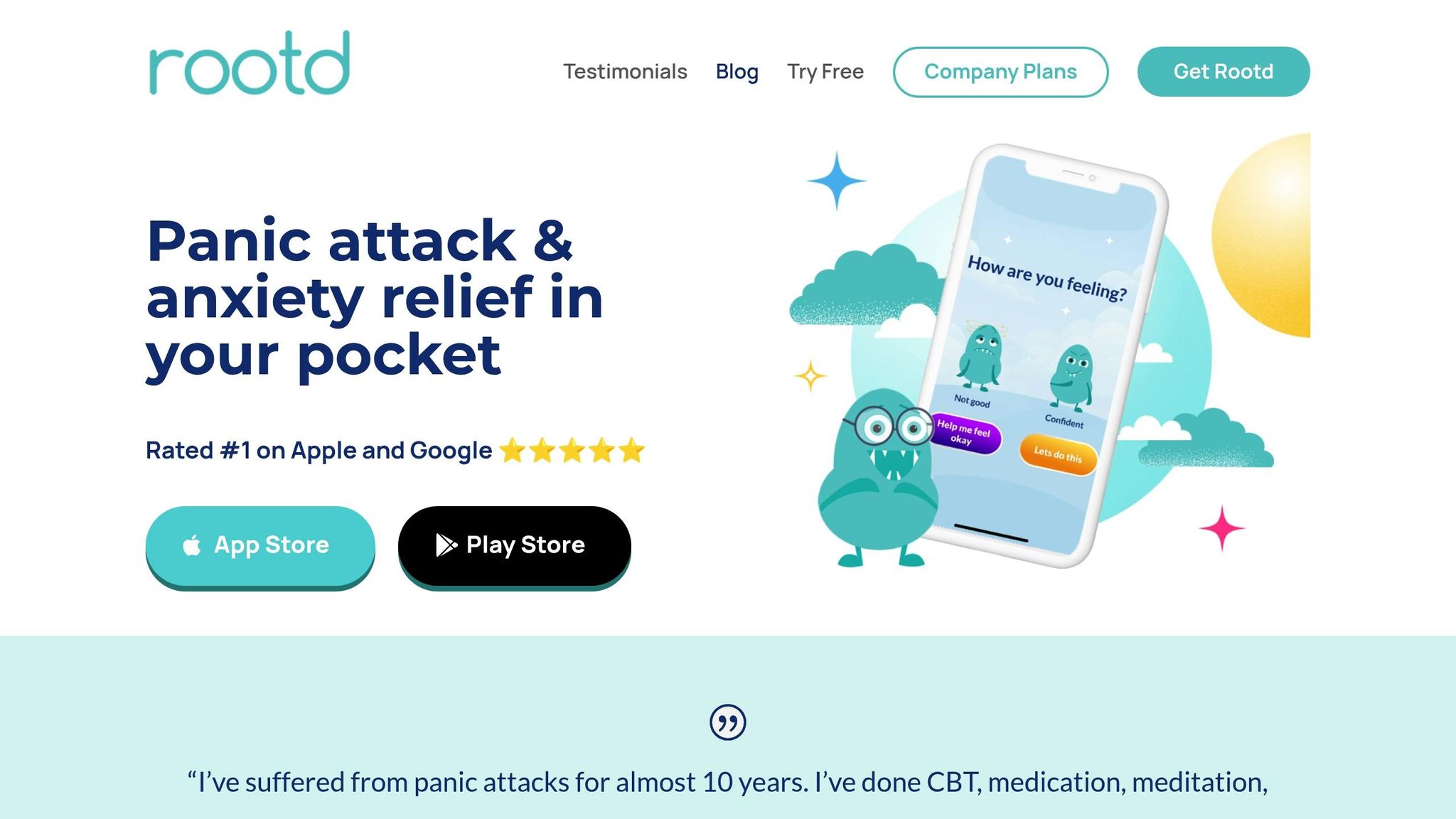
Rootd stands out as a dedicated app designed to help users manage panic attacks and anxiety through proven, research-based methods. With over 3 million users worldwide, it combines cognitive behavioral therapy (CBT) principles with practical tools for both immediate relief and long-term anxiety management.
Tools and Features That Make a Difference
Rootd offers a variety of therapist-approved tools aimed at addressing different aspects of anxiety and panic:
- The Rootr: A panic attack SOS button providing immediate, guided relief during moments of crisis.
- Breathe: Deep breathing exercises to help users regain calm in stressful situations.
- Visualize: Features like guided body scans, visualizations, ASMR, and nature sounds for relaxation.
- Lessons: Educational content explaining anxiety, its causes, and strategies for managing it both in the moment and over time.
- Journal: A mood and habit tracker to help users identify anxiety triggers and patterns.
- Sleep: Resources like white noise, sleep stories, and calming music to promote better rest.
- Emergency Contact: A quick-connect feature for reaching trusted contacts or local support centers.
These tools strike a balance between providing immediate support and fostering long-term anxiety management. Wendy Marion-Orienti, a licensed counselor from PRH International School of Adult Education and Research, endorses the app, stating:
"I appreciate Rootd’s simple, factual, and caring approach, making it an effective and user-friendly tool. I endorse this for individuals looking for support and tools for managing anxiety and panic attacks."
Backed by Research
Rootd’s effectiveness is supported by clinical research. A 2021 study conducted by the Theoretical and Applied Neuroscience Laboratory and the Krigolson Lab at the University of Victoria assessed participants over a six-week period. The results showed significant reductions in stress, anxiety, and the severity of panic attacks, with participants also reporting less stress in workplace settings.
Dr. Olav Krigolson, a professor at the University of Victoria, shared:
"Our study provides clear evidence that the Rootd app helps to decrease stress and anxiety."
Availability and Pricing
Rootd is available for both iOS and Android users. On iOS, it’s compatible with devices like iPhone, iPad, iPod touch, Apple Watch, and Apple Vision. The app has received glowing reviews, with a 4.8-star rating from over 9,200 users on the Apple App Store and a 4.5-star rating from 36,200 reviews on Google Play.
While the app offers a free version with limited features, users can unlock its full potential with Rootd Premium. Subscription options include:
- $9.99 per month
- $79.99 annually (around $6.67 per month)
- $199 for lifetime access
Premium members gain unlimited access to all tools, in-depth lessons, a wide range of relaxation features, and dedicated customer support.
sbb-itb-b1dedcc
10. Youper: AI Emotional Health Assistant
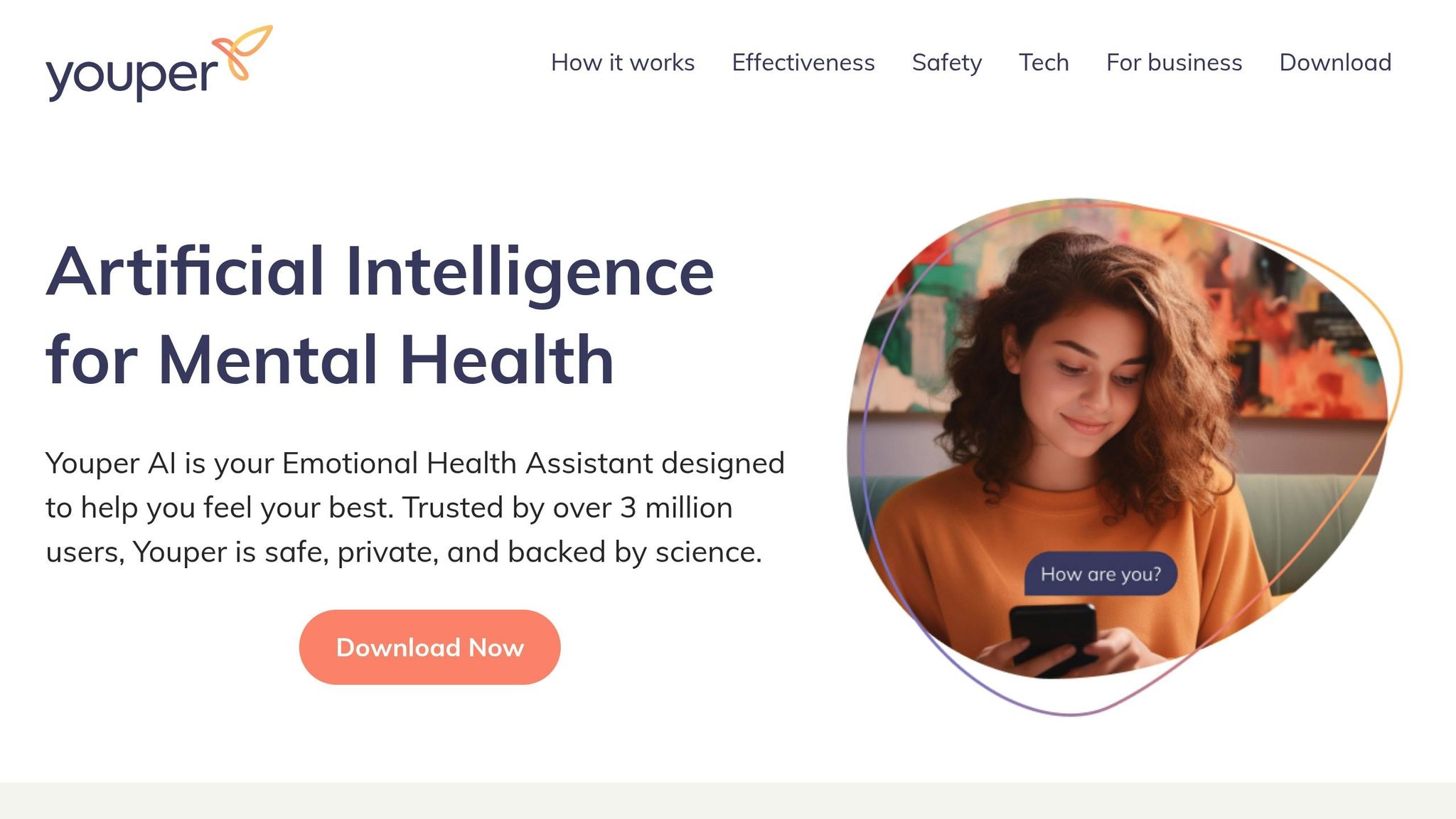
Youper blends artificial intelligence with psychology to help users manage and understand anxiety. With over 3 million users and more than 10 million conversations under its belt, the app relies on Cognitive Behavioral Therapy (CBT) techniques to provide immediate support and promote long-term emotional well-being.
What sets Youper apart is its conversational approach. Instead of relying on traditional mood tracking, it engages users in natural, interactive chats. As Stella, a user, shared in her review:
"Youper uses cognitive behavioral therapy techniques, but by asking questions and learning what works for you, it makes you feel at ease and supported. It cannot replace a real therapist, but it is undoubtedly an excellent place to start."
Anxiety Tracking Capabilities
Youper’s AI chatbot conducts daily check-ins, analyzing user responses to offer tailored recommendations while tracking moods, thoughts, and feelings. It goes beyond simple rating systems, monitoring symptoms across six mental health conditions, including anxiety, depression, and post-traumatic stress.
The app’s AI learns from each interaction, painting a detailed picture of emotional patterns and triggers. Users can set reminders for goal check-ins and receive personalized suggestions to help them adjust and meet their mental health goals. Impressively, over 80% of users report improved mood and overall mental health.
Therapeutic Tools and Techniques
Youper provides just-in-time interventions to help users manage emotions effectively when it matters most. For anxiety, the app offers CBT-based exercises such as cognitive restructuring, mindfulness, self-compassion techniques, gratitude journaling, acceptance exercises, and behavioral activation. These tools help users reframe challenges, discover positive perspectives, and boost motivation.
Clinical Validation and Evidence
Youper’s impact has been backed by research. A Stanford University study found notable improvements in depression and anxiety symptoms after just two weeks of use. Additionally, research published in the Journal of the American Medical Association highlighted Youper as the most engaging digital health solution for anxiety and depression.
In a study involving 4,500 users, anxiety levels dropped by 24% within two weeks, with the reduction sustained after four weeks. The study showed a medium effect size for anxiety improvement (d=0.57) within the first two weeks.
Dr. Jose Hamilton, M.D., founder and CEO of Youper, emphasized the app’s role in addressing gaps in mental health care:
"The mental health care system is failing us – studies show that it can take ten years for someone to get adequate treatment. Telemedicine alone can’t solve this problem – there are not enough health professionals, and they are overwhelmed themselves. The most recent study showing that Artificial Intelligence can be applied to reduce symptoms of depression and anxiety led us to expand Youper to offer comprehensive and affordable mental health care."
Platform Availability and Pricing
Youper is available on both iOS and Android, making it accessible to a broad audience. It has earned 4.8 stars on the App Store from 15,300 ratings and 3.9 stars on Google Play from 49,400 reviews. The app also boasts strong user retention, with 42.66% of users still active by week four.
11. Pacifica: Complete Stress Management App
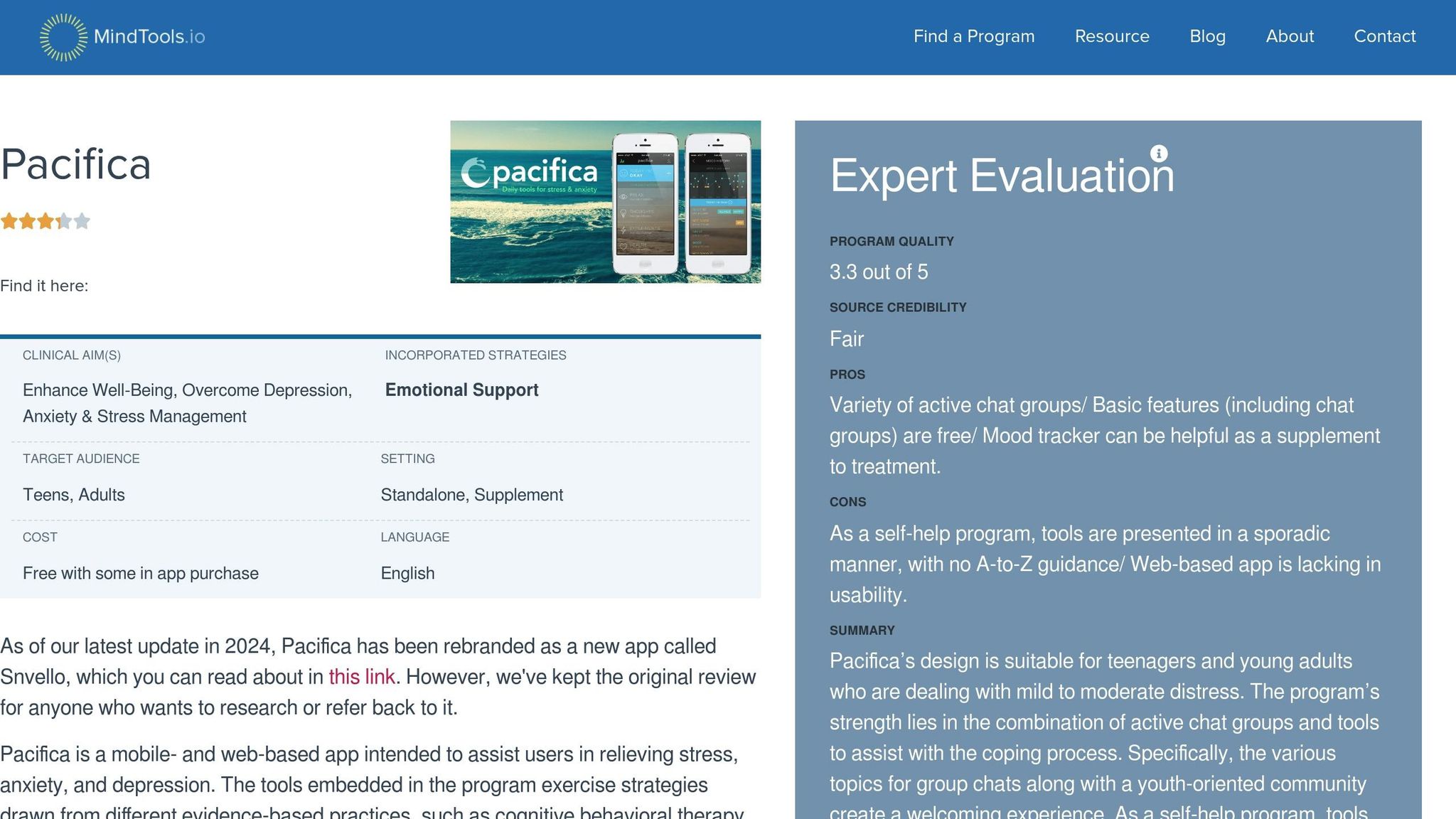
Pacifica brings together several proven techniques to help users manage stress and anxiety effectively. By combining Cognitive Behavioral Therapy (CBT), mindfulness meditation, relaxation exercises, and mood tracking, the app provides tools to tackle anxiety, stress, and depression on a daily basis [108,109].
What makes Pacifica stand out is its ability to address both the emotional and physical sides of anxiety. This integrated approach ensures users get a well-rounded experience, with tools designed for tracking progress and implementing targeted interventions.
Anxiety Tracking Capabilities
Pacifica’s tracking features go beyond basic mood logging, offering a detailed view of your mental health patterns. Users can rate their mood on a scale, link specific emotions to descriptive words, and add journal entries to provide context behind their feelings [108,110]. The app also tracks important lifestyle factors like sleep, exercise, nutrition, hydration, and social interactions [108,112]. Its "Progress" feature visually organizes this data, making it easier to identify patterns and triggers over time.
Therapeutic Tools and Techniques
Pacifica is built around five key activity areas, each targeting different aspects of anxiety management:
- Mood Tracking: Receive reminders to check in with your emotions and add notes, helping you uncover emotional trends over time.
- Relaxation Tools: Access guided exercises like progressive muscle relaxation, deep breathing, and visualization, along with calming soundscapes for immediate stress relief.
- Cognitive Tools: Use the "Thoughts" feature to reflect on daily experiences and challenge negative thinking patterns with CBT-based strategies. Daily audio lessons provide additional CBT insights.
- Experiments: Face anxiety head-on by setting structured goals, tracking your progress, and reflecting on triggers.
These tools work together to provide users with both immediate relief and long-term strategies for managing anxiety.
Clinical Validation and Evidence
Pacifica’s effectiveness is backed by scientific research. A study published in the Journal of Medical Internet Research in June 2019 evaluated its impact on 500 adults with mild-to-moderate anxiety or depression [117,119]. After just one month, participants using Pacifica experienced greater reductions in anxiety, depression, and stress compared to those in a waitlist group. Notably, 41.8% of users showed significant improvement in depression symptoms, compared to 16.8% in the control group, while 39.2% saw major reductions in anxiety compared to 24.2% of controls. The study also found that users who regularly completed thought record exercises were more likely to maintain their progress over a two-month follow-up period [117,118,119].
Platform Availability and Pricing
Pacifica is accessible through both free and premium plans. The premium version is available for $3.99 per month or $29.99 annually [113,114]. The Pathfinder review site rates the app 8/10, with users praising its mood and health tracking features [113,115].
12. Bearable: Symptom Tracking and Analysis
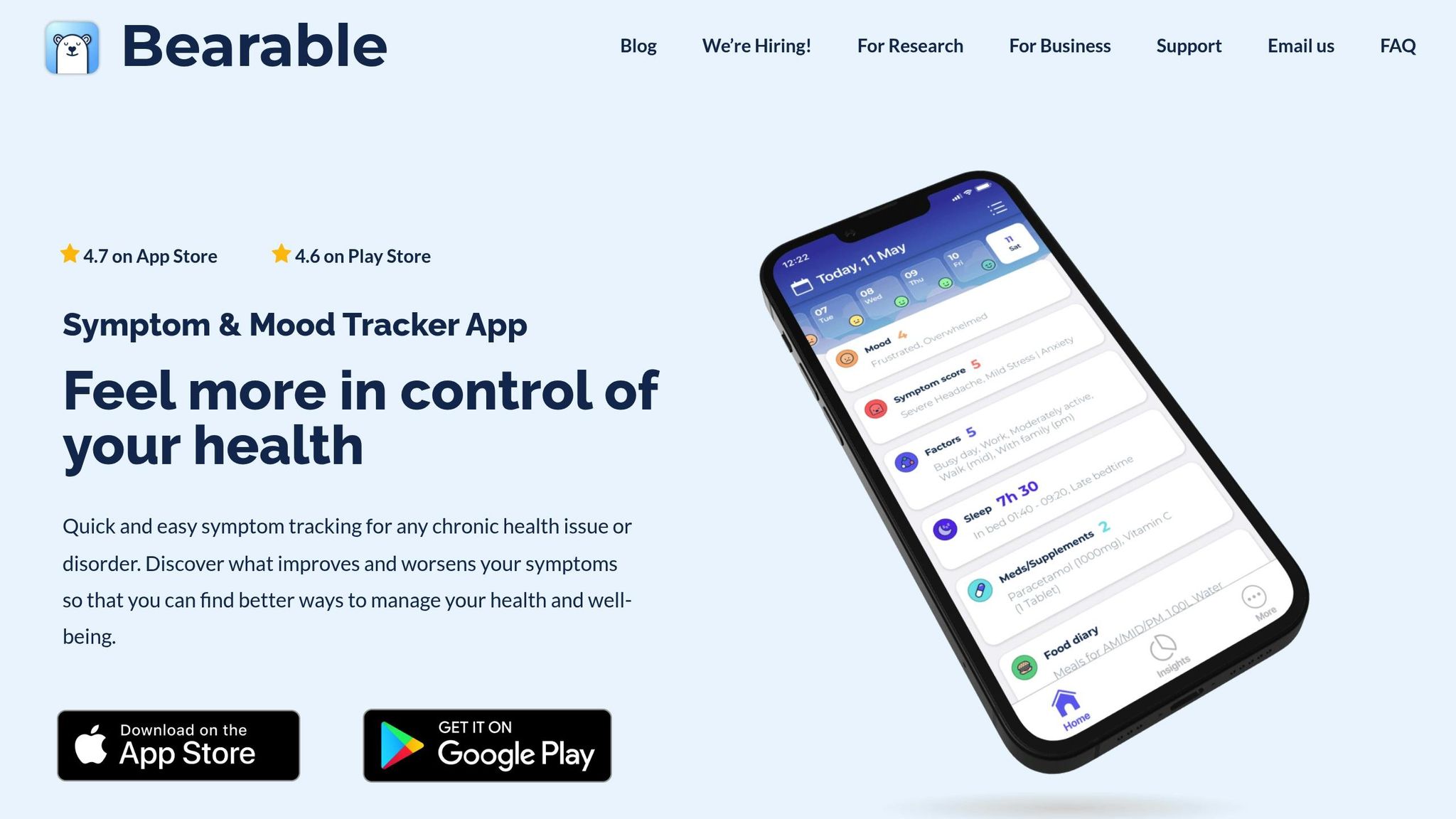
Bearable offers a well-rounded tool for tracking both physical and mental health symptoms, helping users uncover connections between anxiety and lifestyle factors that might otherwise go unnoticed. By monitoring multiple aspects of daily life, the app helps identify anxiety triggers and habits that promote well-being. Its approach combines symptom tracking with lifestyle monitoring, encouraging greater self-awareness.
Anxiety Tracking Capabilities
Bearable stands out for its detailed and customizable tracking options, designed for users who want to understand their anxiety on a deeper level. You can log a variety of factors, including moods, physical and emotional symptoms, activities, medications, and even custom entries tailored to your unique experiences. The app also tracks daily habits like diet, social interactions, exercise, supplements, and self-care routines.
For an even fuller picture, Bearable integrates with fitness trackers like Google Fit and Apple Watch, automatically pulling in data such as sleep patterns, step counts, and weight measurements. Weekly reports summarize key metrics, including mood, symptoms, sleep, and energy levels, making it easier to spot patterns over time.
RiversideRunner: "Now I have EMPIRICAL DATA all gathered in one place that provides an accurate assessment of my moods, symptoms both mental and physical, everything all in one place."
Platform Availability and Pricing
Bearable ensures accessibility with its availability on both iOS and Android devices. The app offers a free version that includes unlimited custom tracking, while additional features are available through a premium subscription. Pricing options include $34.99 per year or $6.99 per month, with frequent discounts on annual plans (as low as $18.99) and a free 7-day trial for new users. For those facing financial challenges, the "Bearable Heroes" sponsorship program provides access at no cost.
The app has received excellent user feedback, earning a 4.7-star rating on the Apple App Store (from 2,300 reviews) and Google Play Store (from 6,430 reviews). Users often highlight its simple design and flexibility.
Hannah: "I’ve tried every mood tracker on the market to help manage and keep track of my depression… Bearable has the ability to track multiple factors without a cluttered design and awesome customizability so it can be suited to my specific needs. This is the app I’ve been looking for for years!"
With over 75% of users reporting that Bearable helps them feel more in control of their health, the app is a valuable tool for anyone looking to better understand their well-being. Experts suggest starting with just a few key factors to track, gradually expanding as you get comfortable, to prevent feeling overwhelmed.
13. CBT Companion: Thought Pattern Tracker
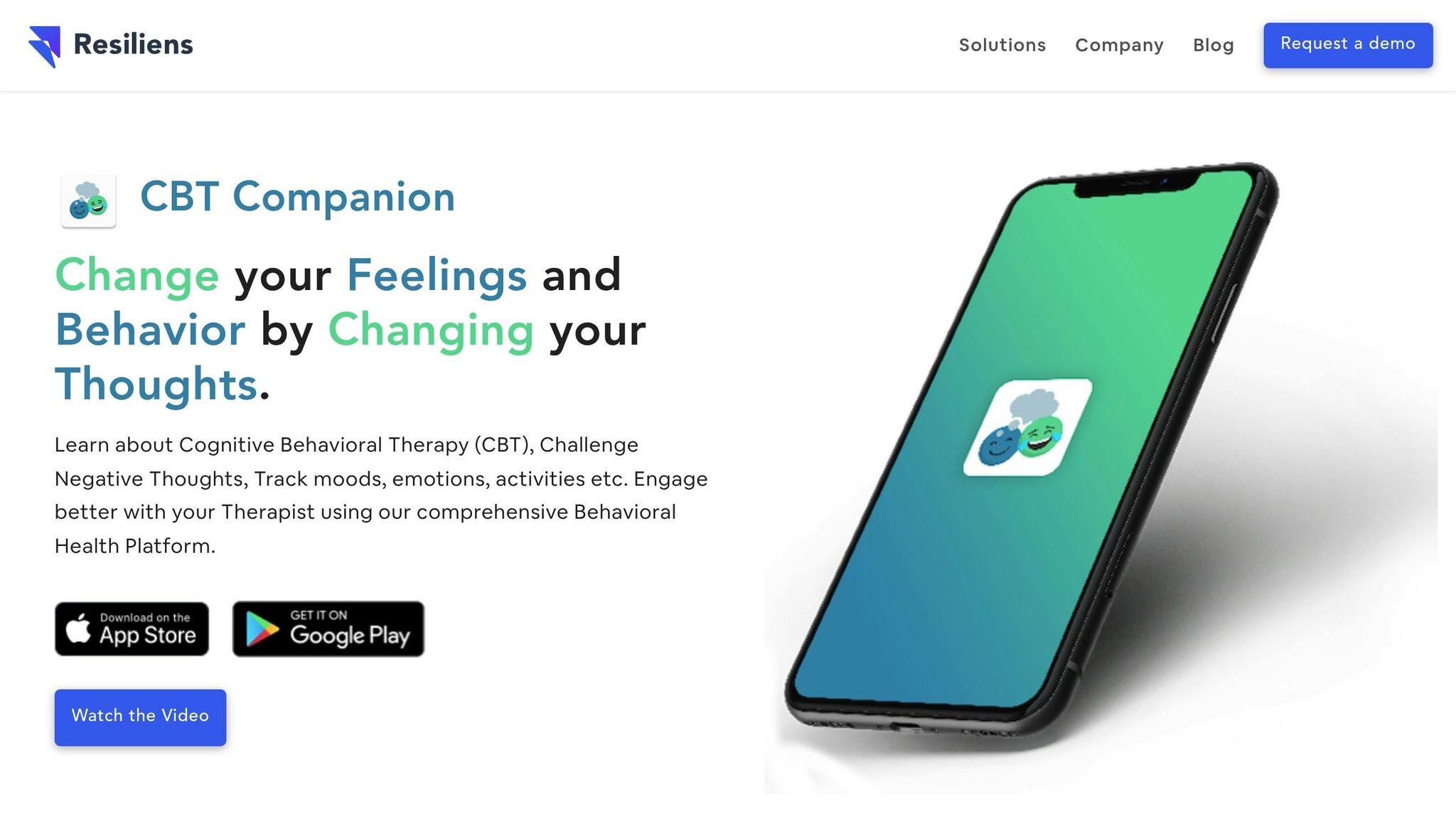
CBT Companion takes the traditional tools of cognitive behavioral therapy (CBT) and turns them into an interactive digital experience. By helping users track thought patterns and practice techniques to manage anxiety, the app offers a modern way to challenge negative thinking through structured exercises and detailed mood tracking.
Anxiety Tracking Capabilities
With the diary card feature, users can log their mood, emotions, urges, behaviors, and coping skills multiple times a day. This consistent tracking helps uncover triggers and patterns, offering a clearer picture of how daily activities, sleep, and other factors influence anxiety. The app provides easy-to-read mood charts, summaries, and counts, making it simple to spot trends and evaluate which coping strategies are most effective.
To encourage consistency, users can set reminders for diary entries, meditations, and affirmations. CBT Companion also syncs with Apple’s HealthKit, automatically pulling in data on physical activity, nutrition, and sleep. This integration creates a more complete view of the factors that may affect anxiety levels, enhancing the app’s ability to guide users toward meaningful insights.
Therapeutic Tools and Techniques
CBT Companion offers more than 70 video lessons and animations that break down CBT concepts, such as identifying thinking errors and reframing negative beliefs, into digestible exercises. For those seeking additional support, the app includes over 500 meditations covering various themes, along with a community section where users can join discussion forums and peer groups.
For those working with therapists, the app provides a collaborative edge. Clinicians can assign homework through a separate platform, and users can complete and submit their exercises directly within the app. This streamlines communication and ensures that therapy sessions remain focused and productive.
Clinical Validation and Evidence
Although there isn’t specific scientific research validating CBT Companion’s effectiveness, its foundation in established CBT principles lends it credibility. One Mind PsyberGuide awarded the app a credibility score of 8 out of 15 in March 2023. Additionally, a psychology doctoral student praised the app for its accurate representation of CBT concepts and its usefulness in daily mood tracking and challenging negative thoughts. User reviews also highlight its educational value, with one reviewer noting that it covers more ground than a formal CBT class.
Platform Availability and Pricing
CBT Companion is available on both iOS and Android. It boasts a 4.6-star rating on the Apple App Store from 430 reviews and a 4.4-star rating on Google Play, with approximately 3,350 reviews and over 100,000 downloads. New users can try the app for free for three days, after which subscription options include $9.99 per month or $49.99 for six months.
"Absolutely love this app. I started with the free version (which is still fantastic on its own!) and upgraded to paid within a week, because it was that good and I wanted to support the devs."
- Berta Sporer IV
CBT Companion stands out as a valuable resource for anyone looking to dive into CBT techniques while keeping detailed records to share with a healthcare provider.
14. Finch: Self-Care Through Gaming
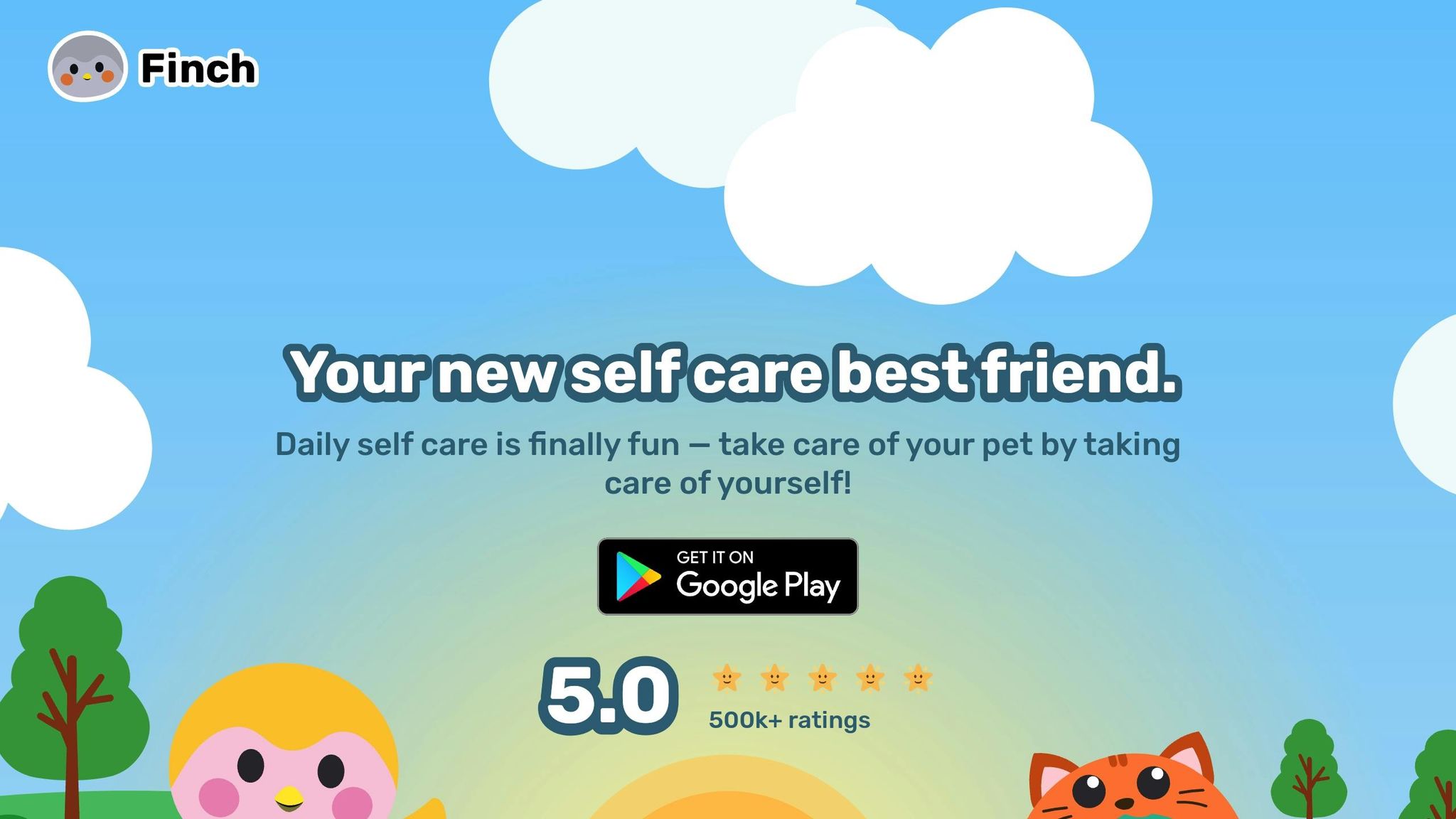
Finch takes a refreshing approach to anxiety management by blending self-care with the fun of virtual pet ownership. The app encourages users to complete real-world wellness tasks by caring for a customizable digital bird. By gamifying the process, Finch helps users build healthier habits through positive reinforcement rather than guilt or pressure.
Anxiety Tracking Capabilities
Every time users open Finch, they’re prompted to log their mood, creating a consistent record of emotional patterns over time. This feature makes it easier to spot trends and triggers. Users can also set personalized goals with flexible scheduling options, like specific days of the week or expiration dates, to track their progress on anxiety-reducing activities. What sets Finch apart is how it transforms traditional tracking into an engaging, game-like experience.
Instead of focusing on detailed symptom analysis, Finch emphasizes completing self-care tasks. Activities like meditation, journaling, or exercise earn users Rainbow Stones, which can be used to unlock new outfits, adventures, and customization options for their virtual pet. This external motivation system shifts the focus away from self-criticism and toward positive action.
"While negative self-talk, guilt, and feelings of worthlessness might make someone struggle with self-care, taking care of a virtual pet externalizes the motivation and can help detach themselves from self-criticism and allow focus on the needs of the pet."
Therapeutic Tools and Techniques
Finch includes a "First Aid" section designed to provide immediate relief during moments of anxiety. This section offers tools like breathing exercises, the rainbow grounding method, and observation techniques specifically tailored for panic attacks. The rainbow grounding method, for instance, encourages users to focus on colors in their surroundings to distract from anxious thoughts.
The app also features guided breathing exercises, calming soundscapes, and short yoga routines, all accessible on demand. These therapeutic tools are seamlessly integrated into the gamified system, where completing wellness activities directly benefits the virtual pet. This design creates a sense of momentum – finishing one task often inspires users to tackle another.
Beyond immediate relief, Finch fosters long-term self-care habits through its reward system. Users can customize their bird, send it on adventures, and unlock new features by staying consistent with their self-care routines. Since the app avoids negative reinforcement, it’s particularly helpful for those who might otherwise feel overwhelmed by guilt or shame.
"That’s the purpose of the gamification, to change your motivation to do it more in the first place…You’re getting that affirmation when you do the checking off. This thing is helping you build habits you want." – Heather Arbiter, gamification and engagement consultant
Clinical Validation and Evidence
Although Finch hasn’t undergone extensive clinical trials, its foundation in positive reinforcement aligns with well-established therapeutic principles. Research supports the idea that gamification can motivate people to maintain healthy habits, making Finch a valuable tool for emotional well-being. It’s designed to complement – not replace – traditional anxiety treatments, helping users establish daily routines and enhance existing therapies.
For example, a 2025 study published in the Journal of the American Medical Association highlighted how gamification can encourage consistent meditation practices, reinforcing Finch’s approach.
"It’s just a much more gentle introduction than some of the more formalized programs that are out there either in person or in a group setting." – Rachel Radin, PhD, co-author of "Digital Meditation to Target Employee Stress; A Randomized Clinical Trial"
Platform Availability and Pricing
Finch is available for both iOS and Android users, boasting an impressive 4.9-star rating on both platforms. With over 5 million downloads on Google Play, it’s a favorite among wellness apps. On Apple’s App Store, it ranks #6 in the Health and Fitness category.
The app operates on a freemium model, offering all essential tools for free. For those looking to unlock extra features, Finch Plus is available for $9.99 per month or $70.99 annually, with a 7-day free trial for new users. Premium features include additional customization options, icons, and exclusive content.
User reviews highlight Finch’s ability to make self-care feel manageable and rewarding. One user shared:
"Finch helps me do those small things (or at least enough of them each day that things don’t spiral out of control) because even if they don’t matter to me, they matter to my birb, and my birb matters to me." – shaygitz
15. Violet: Anxiety Support for All Communities
Inclusive Support Approach
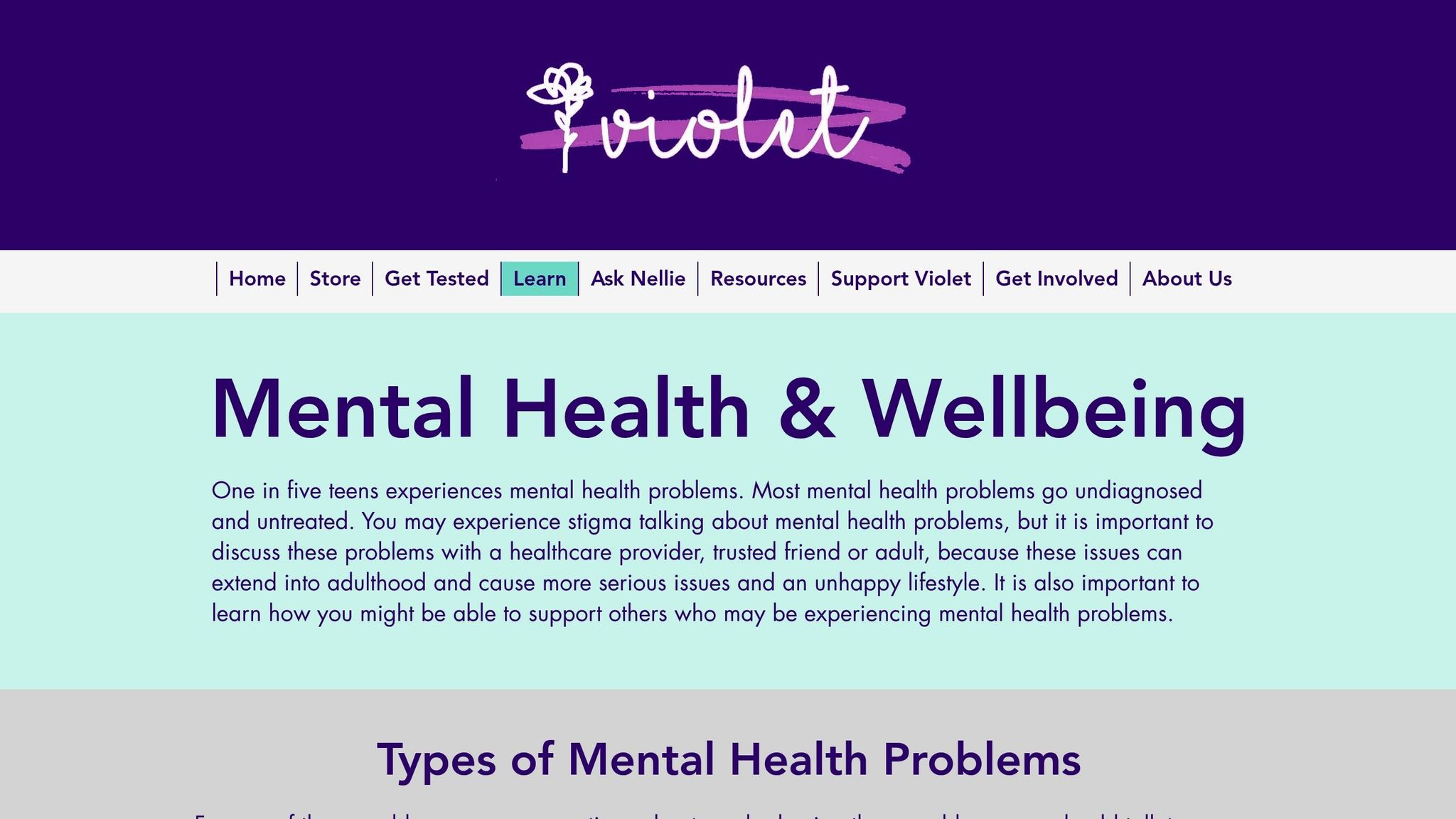
Violet takes a thoughtful approach to anxiety support by addressing the diverse experiences of individuals from various communities. The app emphasizes understanding and meeting the specific needs of people from different backgrounds, offering care that is both accessible and empathetic. This focus on inclusivity ensures that users feel seen and supported, laying a strong foundation for evaluating its impact through clinical studies.
Clinical Validation and Evidence
While Violet itself hasn’t undergone dedicated trials, research on similar digital tools highlights its potential. For example, a study published in the Journal of Medical Internet Research (April 2025) examined a web-based modular iCBT program called Alena, delivered via a smartphone app. Alena, which uses therapeutic methods comparable to Violet, demonstrated significant results in trials with diverse adult participants. The intervention led to notable reductions in SPIN scores compared to control groups (p < .05, Cohen d ≈ 0.45), with high user completion rates.
16. NOCD: OCD and Anxiety Tracker
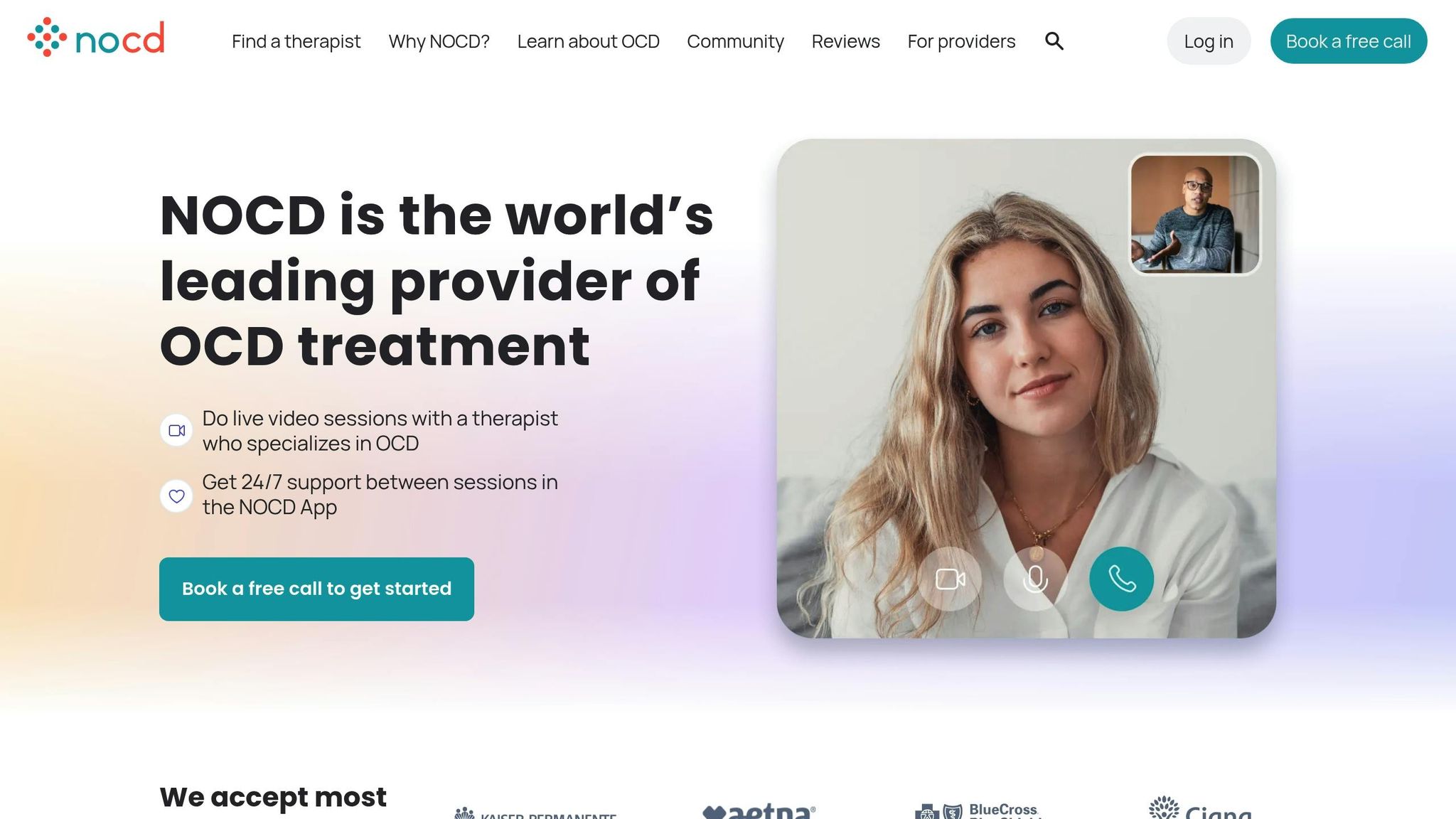
NOCD focuses on helping individuals manage OCD and related anxiety through a combination of detailed tracking and proven therapeutic techniques.
Anxiety Tracking Capabilities
NOCD takes anxiety tracking to the next level with tools specifically designed for OCD. Users can log their obsessions (fears) and compulsions (behaviors) to better understand their symptoms. The app includes weekly tests to gauge the severity of OCD symptoms and tracks distress levels during exposure exercises. During episodes, users are prompted with questions like, "Are you experiencing an obsession or compulsion?", "What triggered it?", and "How intense is your anxiety?".
Therapeutic Tools and Techniques
Beyond tracking, NOCD provides users with practical tools to manage symptoms in real time. The app incorporates Exposure and Response Prevention (ERP) and Acceptance and Commitment Therapy (ACT) to help users identify triggers and develop coping strategies . A standout feature is its SOS function, offering immediate mindfulness-based guidance during difficult moments. This feature provides tailored, acceptance-focused strategies to help users confront obsessions without giving in to compulsions. Other tools, such as customizable loop tapes, scripts, and exercise reminders, encourage consistent practice between therapy sessions.
Clinical Validation and Evidence
NOCD’s effectiveness is backed by research. A 2020 study found that its eight-week program significantly reduced OCD symptoms. The combination of virtual ERP therapy and in-app support delivered results twice as fast as traditional ERP, with an average symptom reduction of 40% .
"The effectiveness of NOCD’s ERP therapy was validated in the largest peer-reviewed study of OCD treatment ever." – NOCD
Users also share positive experiences. One Apple App Store reviewer wrote:
"I was blown away by how profoundly this super simple app changed my thinking… For me, this was a GAME CHANGER. Like the difference between trying to get in shape without a gym or equipment or personal trainer vs with having that." – jeaniln, Apple App Store Reviewer
Platform Availability and Pricing
NOCD is available on both iOS and Android platforms, boasting impressive ratings of 4.9 stars on Apple and 4.7 stars on Google Play .
The app offers free resources like community discussions, self-help tools, and educational materials. For therapy sessions with OCD specialists, costs vary depending on insurance. With insurance, copays average $50 or less. Without insurance, session fees range from $120 to $240, with the option for interest-free weekly payments.
This pricing model aims to make treatment more accessible, addressing the fact that individuals with OCD often wait 14–17 years before receiving effective care.
App Comparison Table
Here’s a breakdown of popular apps designed to help manage anxiety, comparing their main features, therapeutic approaches, and pricing.
| App | Primary Focus | Key Tracking Features | Therapeutic Methods | Pricing | App Store Ratings | Accessibility Features |
|---|---|---|---|---|---|---|
| Anxiety Journal | Panic attack & anxiety tracking | Attack logs, stress monitoring, detailed journaling | Journaling, pattern recognition | $9.99 monthly/$14.99 yearly/$39.99 trial | iOS: 4.5★, Android: 4.3★ | – |
| Calm | Meditation & mindfulness | Mood tracking, sleep monitoring | Guided meditations, sleep stories, breathing exercises | $14.99 monthly/$69.99 yearly | iOS: 4.8★, Android: 4.3★ | Customizable interface |
| Headspace | Mindfulness training | Progress tracking, session history | Guided meditations, mindfulness exercises | $12.99 monthly/$69.99 yearly | – | Screen reader compatible |
| Worry Watch | Cognitive behavioral tracking | Worry categorization, outcome tracking | CBT-based worry management | $11.99 yearly | – | Simple interface design |
| MindShift CBT | Clinical anxiety management | Anxiety level tracking, trigger identification | CBT techniques, exposure exercises | Free | iOS: 4.3★ | Full offline functionality |
| Happify | Game-based resilience | Mood tracking, progress metrics | Positive psychology games, resilience building | $14.99 monthly/$139.99 yearly | – | Gamified interface |
| Breathwrk | Breathing exercises | Breathing session tracking, stress monitoring | Various breathing techniques | $5.75-$12.00 monthly | iOS: 4.8★ | Audio-guided exercises |
| Sanvello | Clinical-grade tracking | Mood tracking, anxiety assessments | CBT techniques, peer support | $8.99 monthly/$53.99 yearly | iOS: 4.8★, Android: 4.5★ | Insurance coverage options |
| Rootd | Panic attack support | Panic episode tracking, trigger logging | Emergency support, breathing exercises | $9.99 monthly/$79.99 yearly | iOS: 4.8★, Android: 4.5★ | Crisis mode accessibility |
| Youper | AI emotional health | Mood patterns, emotional insights | AI chats, personalized tips | $69.99 yearly | iOS: 4.8★, Android: 3.9★ | Voice interaction support |
| Pacifica | Complete stress management | Multi-dimensional tracking, goal setting | Comprehensive stress management tools | $3.99 monthly/$29.99 yearly | – | Customizable tracking |
| Bearable | Symptom tracking | Detailed symptom analysis, correlation tracking | Data-driven insights, pattern recognition | $6.99 monthly/$34.99 yearly | iOS: 4.7★, Android: 4.7★ | Export functionality |
| CBT Companion | Thought pattern tracking | Thought records, mood monitoring | CBT worksheets, cognitive restructuring | $9.99 monthly/$49.99 six months | iOS: 4.6★, Android: 4.4★ | Structured interface |
| Finch | Self-care gaming | Habit tracking, self-care monitoring | Gamified self-care, virtual pet care | $9.99 monthly/$70.99 yearly | iOS: 4.9★, Android: 4.9★ | Visual progress tracking |
| Violet | Community anxiety support | Social anxiety tracking, community engagement | Peer support, inclusive community features | – | – | Inclusive design |
| NOCD | OCD & anxiety tracking | Obsession/compulsion logging, ERP progress | ERP therapy, ACT techniques | $50+ per session with insurance | iOS: 4.9★, Android: 4.7★ | Clinical validation |
Key Considerations
- Budget and Accessibility: Look for apps that align with your financial situation and offer features like offline functionality or customizable interfaces.
- Specific Needs: Whether you’re seeking crisis support, therapy, tracking tools, or community interaction, there’s likely an app tailored to your requirements. Take advantage of free trials to find the best fit.
Conclusion
Managing anxiety effectively involves combining practical tools, proven strategies, and dependable support systems. The 16 apps discussed in this guide showcase a wide range of digital resources designed to help you monitor symptoms, develop coping mechanisms, and build resilience. Whether you’re looking for symptom trackers, emergency panic support, mindfulness exercises, or cognitive-behavioral techniques, these apps cater to different aspects of anxiety management, offering something for everyone.
The need for accessible mental health tools is clear: around 49 million adults in the U.S. experience anxiety, yet only 36.9% seek professional help. Studies show that anxiety treatment apps can lead to noticeable symptom reduction, with meta-analyses demonstrating significant improvements compared to control groups.
However, it’s essential to see these apps as part of a broader mental health care plan. As Dr. Stephanie Collier from Harvard Health Publishing explains:
"Having a secure place to speak about your stressors, seeing your concerns validated in the eyes of another person, and developing a trusting relationship are all components of therapy. A mobile app removes the human element of a therapeutic relationship, which we know is a critical ingredient in treatment success."
When selecting an app, prioritize one that aligns with your specific needs and feels intuitive to use. Dr. Sabine Wilhelm from Mass General Brigham underscores this point:
"There are so many options, and that’s why it is important that you find an app that addresses your specific concerns. It’s important that you also find it to be engaging and user-friendly. This will help you stay motivated to use it."
Take advantage of free trials to explore features like symptom tracking, meditation, or community support, and don’t forget to review privacy policies and offline functionality. If you’re dealing with severe anxiety that disrupts daily life or experiencing suicidal thoughts, seek professional help immediately – these apps are valuable tools but cannot replace professional care.
Everyone’s journey to better mental health is personal. By incorporating these digital tools into your overall strategy, you’re taking an active step toward consistent self-care and building the resilience needed to navigate life’s challenges.
FAQs
How can I find the right anxiety management app for my needs and budget?
When choosing an anxiety management app, start by figuring out what matters most to you. Are you looking to track your anxiety levels, manage panic attacks, or use stress-relief techniques? Focus on apps that offer features tailored to your needs, such as mood tracking, guided breathing exercises, or relaxation methods.
Budget is another important factor. Many apps provide free trials or basic versions, so you can explore their features before committing to a paid plan. Don’t forget to read user reviews to get insights into others’ experiences and make sure the app has a reliable privacy policy to safeguard your personal information. The best app will align with your goals, feel intuitive to use, and fit seamlessly into your daily routine.
How do anxiety tracking apps protect my privacy, and should I be concerned about data security?
Privacy is an important issue when it comes to using anxiety tracking apps, as not all of them do enough to protect your personal data. Investigations have revealed that some apps share sensitive details, like unique device identifiers, with third parties – often without clearly informing users or obtaining proper consent. On top of that, many apps don’t meet even basic security requirements, leaving your data more vulnerable to breaches.
To safeguard your information, trusted apps implement practices like end-to-end encryption, ask for clear and explicit consent before sharing data, and comply with privacy regulations such as HIPAA. That said, not every app is equally secure. It’s a good idea to carefully read through their privacy policies and explore the settings to make sure your information is being handled in a responsible way.
Can anxiety apps replace therapy, or should they be used alongside professional treatment?
Mental health apps can serve as a handy resource for managing anxiety, offering features like symptom tracking, stress-relief exercises, and mindfulness practices. They’re designed to support your mental health journey but shouldn’t be seen as a substitute for traditional therapy. Unlike licensed therapists, these apps can’t provide the personalized care and deep guidance that many people need.
To get the most out of these tools, think of them as supplements to professional treatment. If you’re dealing with severe anxiety or require more individualized support, connecting with a therapist is crucial to ensure you receive the right level of care.